Donor-directed corpus contributions retain capital character despite exemption claims under section 10(23C)(vi), preventing their treatment as taxable...
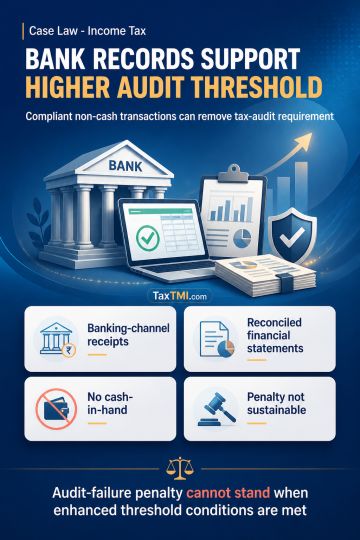
Enhanced tax-audit threshold applies where banking records establish compliant non-cash receipts and payments, eliminating penalty exposure for audit ...
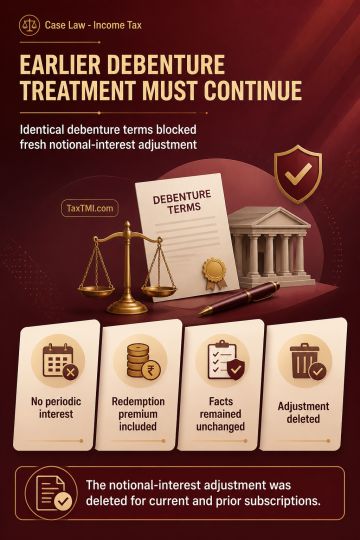
Transfer pricing consistency protects identical non-interest-bearing debenture terms from a later notional-interest adjustment without valid statutory...
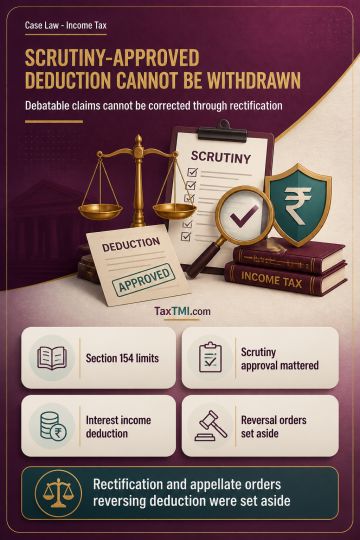
Rectification of debatable deduction claims cannot reverse scrutiny-approved co-operative society interest income deductions as apparent record errors...
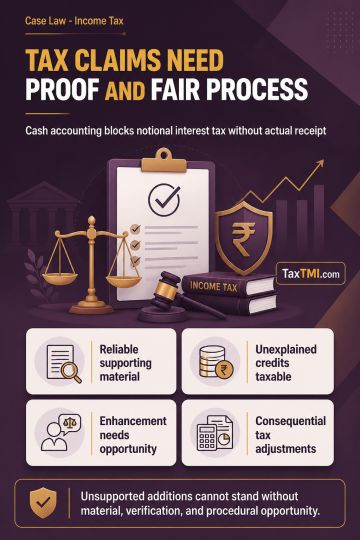
Cash-method accounting bars presumptive interest taxation, while unsupported securities and share-trading additions require reliable material and veri...
Section 7 proceedings based on a money decree cannot be used as a substitute for execution where the real dispute concerns computation of the decretal balance and ordinary enforcement remedies remain available. The Court reiterated that the IBC is meant for genuine insolvency and revival, not coercive debt recovery; on these facts, the corporate debtor was solvent, substantial payments had already been made, and the computation issue was already pending before the Delhi High Court. Although a money decree may in principle give rise to a fresh cause of action for insolvency proceedings, that principle is not automatic and the adjudicating forum must still guard against abuse. The NCLAT erred in treating the decree alone as sufficient; the insolvency application was restored to dismissal and execution was left open as the proper remedy.
Section 7 proceedings based on a money decree cannot be used as a substitute for execution where the real dispute concerns computation of the decretal balance and ordinary enforcement remedies remain available. The Court reiterated that the IBC is meant for genuine insolvency and revival, not coercive debt recovery; on these facts, the corporate debtor was solvent, substantial payments had already been made, and the computation issue was already pending before the Delhi High Court. Although a money decree may in principle give rise to a fresh cause of action for insolvency proceedings, that principle is not automatic and the adjudicating forum must still guard against abuse. The NCLAT erred in treating the decree alone as sufficient; the insolvency application was restored to dismissal and execution was left open as the proper remedy.
Note: It is a system-generated summary and is for quick reference only.
 TaxTMI
  TaxTMI
 of 4826












 Join Channel