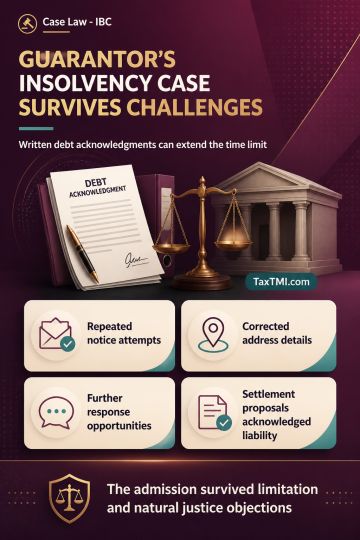
Service of notice and contractual debt acknowledgment preserved insolvency admission against a corporate guarantor despite limitation and natural just...
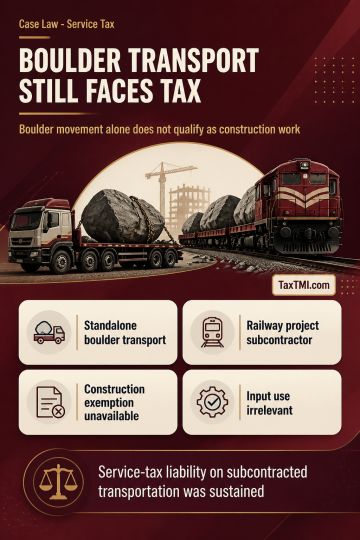
Original works exemption excludes standalone boulder transportation, leaving subcontracted railway-project transport services subject to service tax l...
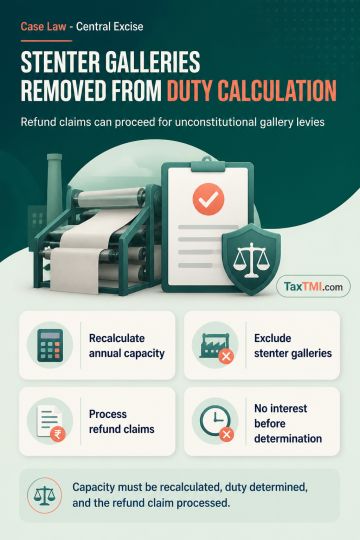
Annual production capacity determinations excluding stenter galleries support refunds for unconstitutional excise levies without an unjust-enrichment ...
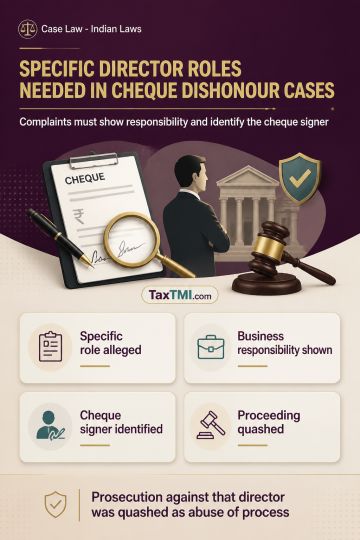
Vicarious liability for cheque dishonour requires specific allegations of responsibility and cheque signatory; generic director allegations cannot sus...
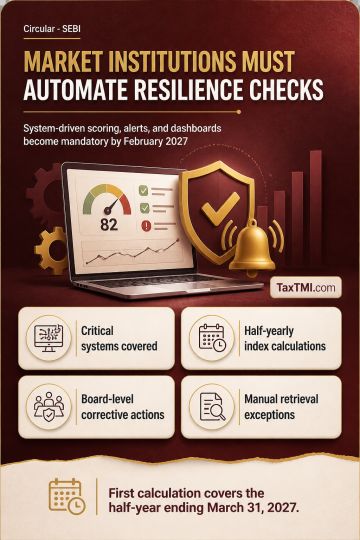
IT Resilience Index requires market infrastructure institutions to automate resilience scoring, early warnings, and continuous service-delivery monito...
Section 7 proceedings based on a money decree cannot be used as a substitute for execution where the real dispute concerns computation of the decretal balance and ordinary enforcement remedies remain available. The Court reiterated that the IBC is meant for genuine insolvency and revival, not coercive debt recovery; on these facts, the corporate debtor was solvent, substantial payments had already been made, and the computation issue was already pending before the Delhi High Court. Although a money decree may in principle give rise to a fresh cause of action for insolvency proceedings, that principle is not automatic and the adjudicating forum must still guard against abuse. The NCLAT erred in treating the decree alone as sufficient; the insolvency application was restored to dismissal and execution was left open as the proper remedy.
Section 7 proceedings based on a money decree cannot be used as a substitute for execution where the real dispute concerns computation of the decretal balance and ordinary enforcement remedies remain available. The Court reiterated that the IBC is meant for genuine insolvency and revival, not coercive debt recovery; on these facts, the corporate debtor was solvent, substantial payments had already been made, and the computation issue was already pending before the Delhi High Court. Although a money decree may in principle give rise to a fresh cause of action for insolvency proceedings, that principle is not automatic and the adjudicating forum must still guard against abuse. The NCLAT erred in treating the decree alone as sufficient; the insolvency application was restored to dismissal and execution was left open as the proper remedy.
Note: It is a system-generated summary and is for quick reference only.
 TaxTMI
  TaxTMI
 of 4828








 Join Channel