Independent show-cause notices remain separate proceedings, while customs adjudication challenges should ordinarily follow the statutory appellate rem...
Institutional incapacity in customs settlement proceedings excludes non-functional quorum periods from statutory disposal timelines, preventing automa...
Interactive touchscreen panels with integrated computing functions fall under automatic data-processing machines rather than display monitors for cust...
Ex parte injunction service requirements were substantially met, while civil recovery and SFIO investigation into provident fund defalcation continued...
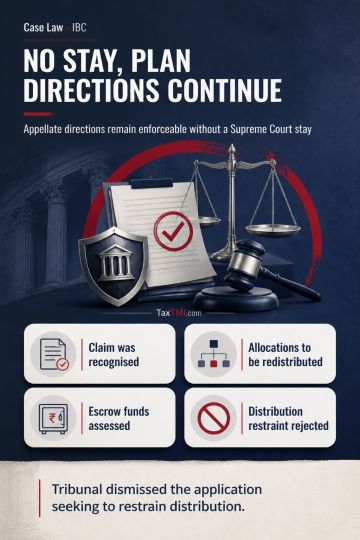
Enforcement of resolution-plan directions continues without a Supreme Court stay, preventing suspension of redistribution and escrowed-fund distributi...
Third-party ownership claims over attached property require Special Court adjudication where purchasers lack registered sale deeds and bona fides rema...
Pure-agent reimbursements in clearing and forwarding services are excluded from taxable value when qualifying third-party payments are properly record...
Provisional attachment under the PMLA was upheld because the controlling requirement is material showing possession of proceeds of crime linked to a scheduled offence, and the provision is not limited to persons named in the predicate case. The Court accepted that reasons to believe may be based on circumstantial material, including financial patterns, seized documents and Section 50 statements, and held that the burden under Section 24 shifted once the attached property was shown to be involved in money laundering. It also held that proceeds of crime includes value equivalent assets, so properties acquired before the offence period may be attached if the original tainted assets are unavailable. The challenge to the single-member coram was rejected.
Provisional attachment under the PMLA was upheld because the controlling requirement is material showing possession of proceeds of crime linked to a scheduled offence, and the provision is not limited to persons named in the predicate case. The Court accepted that reasons to believe may be based on circumstantial material, including financial patterns, seized documents and Section 50 statements, and held that the burden under Section 24 shifted once the attached property was shown to be involved in money laundering. It also held that proceeds of crime includes value equivalent assets, so properties acquired before the offence period may be attached if the original tainted assets are unavailable. The challenge to the single-member coram was rejected.
Note: It is a system-generated summary and is for quick reference only.
 TaxTMI
  TaxTMI
 of 4826




















 Join Channel


