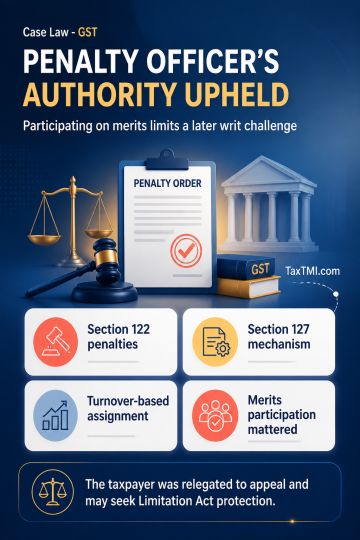
Proper-officer jurisdiction under UPGST penalty provisions upheld; participation on merits prevents bypassing the statutory appellate remedy through w...
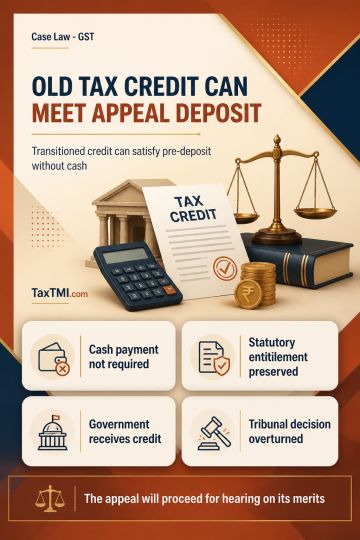
Transitioned CENVAT credit may validly satisfy mandatory pre-deposit requirements for legacy service tax appeals through Electronic Credit Ledger debi...
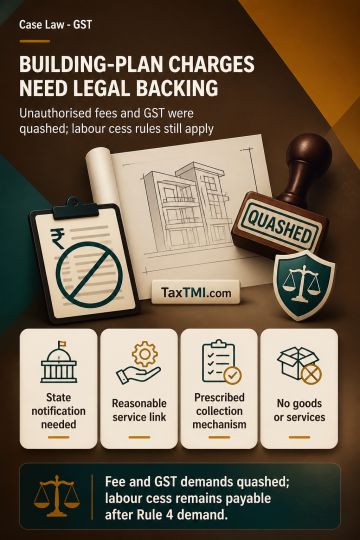
Building-plan sanction charges require statutory authority; unauthorised fees and GST were quashed, while labour cess must follow prescribed collectio...
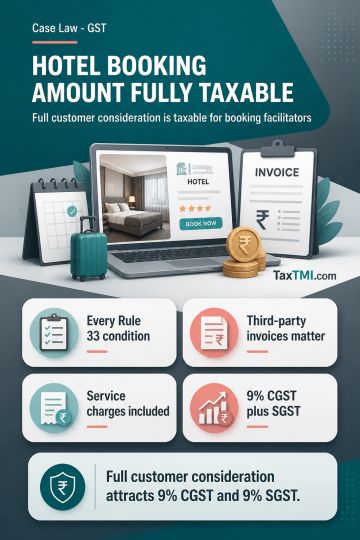
Pure-agent exclusion fails where hotel booking facilitators receive third-party services themselves, making entire customer consideration taxable as r...
Transfer pricing requires evidence for AMP transactions, functionally reliable comparables, and appropriate aggregation or Berry Ratio benchmarking me...
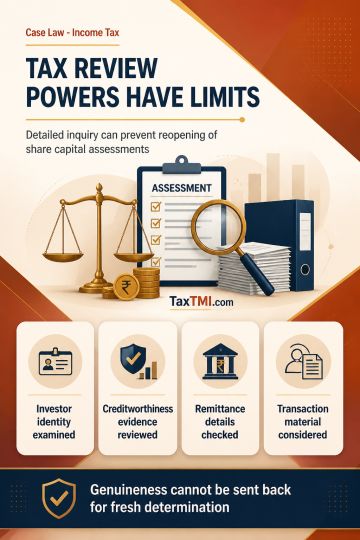
Revisionary jurisdiction cannot reopen share capital assessments where adequate inquiry supports a permissible view and no independent error is establ...
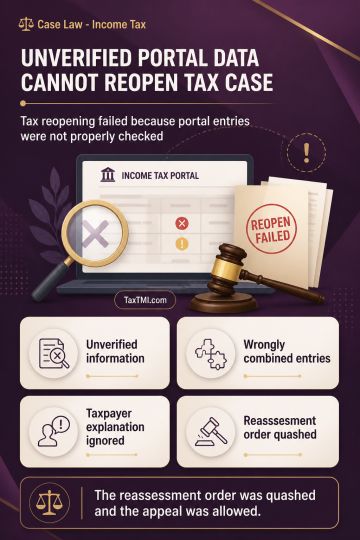
Reassessment jurisdiction fails where unverified portal information is aggregated without examining the taxpayer's explanation or relevance of entries...
Anticipatory bail was refused in a CGST fake-invoice and fraudulent input tax credit investigation, as the HC found prima facie material showing an organised economic offence and the applicants' central role in it. The Court relied on bank records, GST portal material and electronic communications, not merely witness statements, to conclude that one applicant led GST operations and finances while the other facilitated circulation of invoices. Emphasising that economic offences require stricter scrutiny and that non-compoundable GST offences reflect legislative seriousness, the Court held that ongoing investigation and possible custodial interrogation justified denial of pre-arrest protection.
Anticipatory bail was refused in a CGST fake-invoice and fraudulent input tax credit investigation, as the HC found prima facie material showing an organised economic offence and the applicants' central role in it. The Court relied on bank records, GST portal material and electronic communications, not merely witness statements, to conclude that one applicant led GST operations and finances while the other facilitated circulation of invoices. Emphasising that economic offences require stricter scrutiny and that non-compoundable GST offences reflect legislative seriousness, the Court held that ongoing investigation and possible custodial interrogation justified denial of pre-arrest protection.
Note: It is a system-generated summary and is for quick reference only.
 TaxTMI
  TaxTMI
 of 4826










 Join Channel


