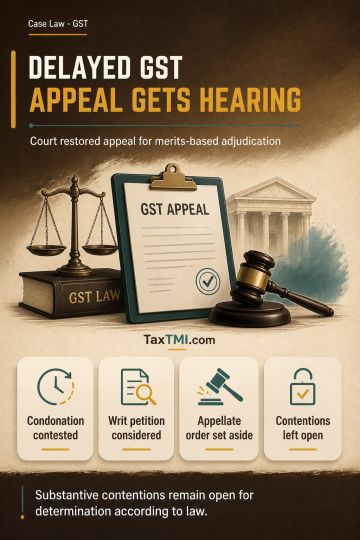
Necessary-party requirements limit impleadment of independent entities, while deferred consideration does not create an appealable adverse determinati...
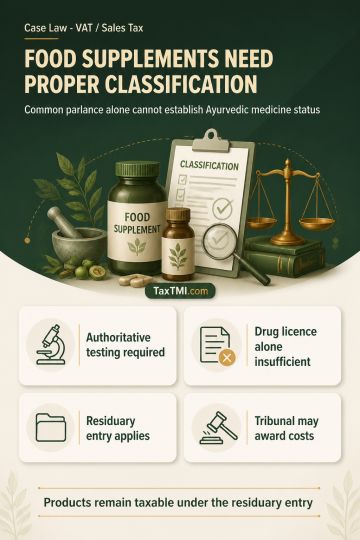
Food supplement classification requires common parlance and authoritative tests, preventing treatment as proprietary Ayurvedic medicines without suppo...
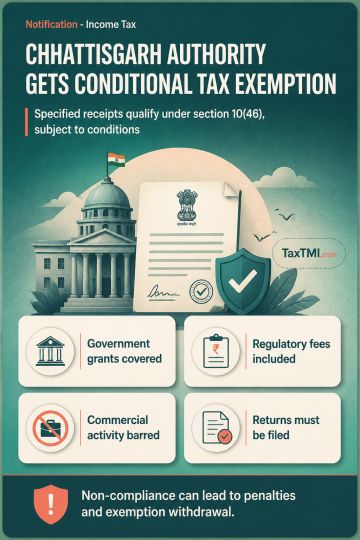
Specified regulatory authority income receives conditional tax exemption, subject to non-commercial activity, unchanged income character, and return f...
Tax exemption for regulatory authority income applies retrospectively, subject to non-commercial activity, unchanged income sources, and return-filing...
Input tax credit conditions remain constitutionally valid, with eligible recipient claims considered under GST circulars and retrospective filing dead...
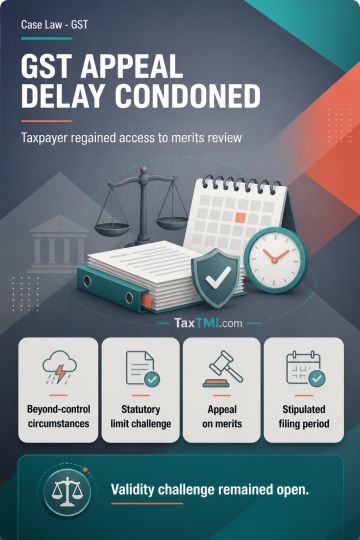
Writ jurisdiction can be used to restore a GST appellate remedy where the statutory condonation limit prevents consideration of a delayed appeal, if the delay is shown to arise from circumstances beyond the appellant's control. The Court treated cancellation of GST registration as affecting the ability to carry on business and livelihood, and found that refusal to hear the appeal on merits would cause grave prejudice. It therefore condoned the 720-day delay, set aside the order rejecting the appeal as time-barred, and directed the appellate authority to hear and decide the appeal on merits.
Writ jurisdiction can be used to restore a GST appellate remedy where the statutory condonation limit prevents consideration of a delayed appeal, if the delay is shown to arise from circumstances beyond the appellant's control. The Court treated cancellation of GST registration as affecting the ability to carry on business and livelihood, and found that refusal to hear the appeal on merits would cause grave prejudice. It therefore condoned the 720-day delay, set aside the order rejecting the appeal as time-barred, and directed the appellate authority to hear and decide the appeal on merits.
Note: It is a system-generated summary and is for quick reference only.
 TaxTMI
  TaxTMI
 of 4817











 Join Channel