Business expenditure deduction requires proof of genuine commission payments and commercial allowability; turnover growth alone cannot validate the cl...
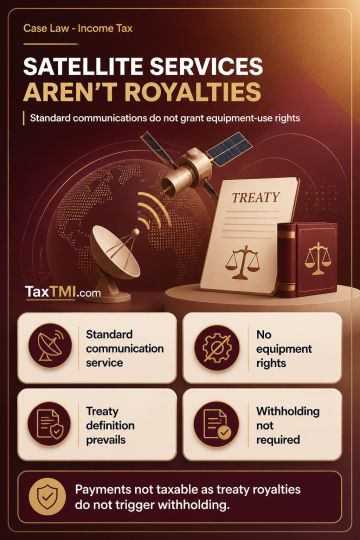
Article 8 treaty coverage excluded third-party airline support services, while documented demonetisation cash receipts remained accepted business inco...
Functional comparability under TNMM requires highway contract benchmarks to reflect operation, maintenance and transfer activities, requiring fresh be...
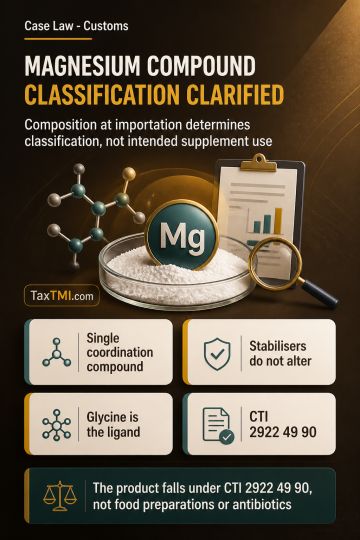
Objective characteristics govern magnesium bis-glycinate chelate classification as an amino-acid coordination compound, not a food preparation or anti...
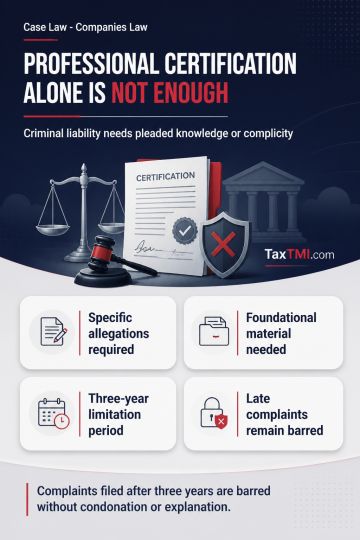
Independent professional certification requires pleaded knowledge or complicity for criminal liability; untimely complaints remain barred by limitatio...
Writ jurisdiction can be used to restore a GST appellate remedy where the statutory condonation limit prevents consideration of a delayed appeal, if the delay is shown to arise from circumstances beyond the appellant's control. The Court treated cancellation of GST registration as affecting the ability to carry on business and livelihood, and found that refusal to hear the appeal on merits would cause grave prejudice. It therefore condoned the 720-day delay, set aside the order rejecting the appeal as time-barred, and directed the appellate authority to hear and decide the appeal on merits.
Writ jurisdiction can be used to restore a GST appellate remedy where the statutory condonation limit prevents consideration of a delayed appeal, if the delay is shown to arise from circumstances beyond the appellant's control. The Court treated cancellation of GST registration as affecting the ability to carry on business and livelihood, and found that refusal to hear the appeal on merits would cause grave prejudice. It therefore condoned the 720-day delay, set aside the order rejecting the appeal as time-barred, and directed the appellate authority to hear and decide the appeal on merits.
Note: It is a system-generated summary and is for quick reference only.
 TaxTMI
  TaxTMI
 of 4819















 Join Channel