Current account treatment of overseas tournament services removed most FEMA findings, but excess EEFC remittance and delayed repatriation remained bre...
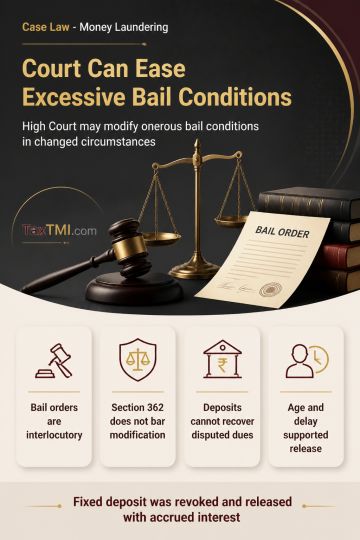
Modification of bail conditions remains available through inherent jurisdiction where onerous deposits undermine justice and cannot recover disputed d...
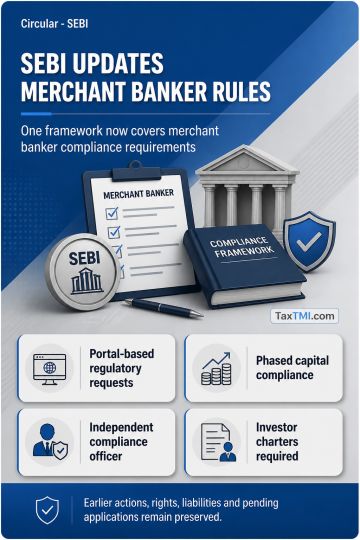
Merchant banker regulation consolidates registration, governance, capital, reporting, outsourcing and investor-protection requirements under an update...
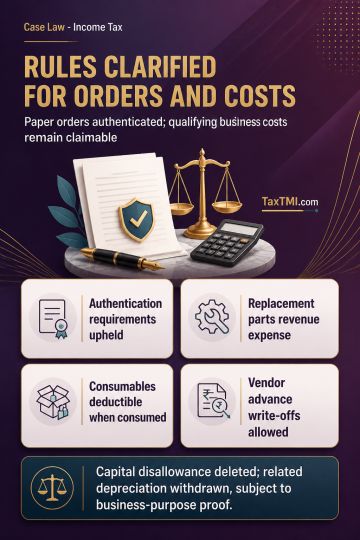
Authentication of paper assessment orders upheld, while qualifying repairs, consumables and vendor advance write-offs remain deductible business claim...
ITAT held that commission paid for procuring bonds in a one-time...
Business expenditure disallowance failed where commission, related-party salary and promotion payments were supported by records and inquiry was inadequate.
Contents
Summary
Note
Bookmark
Share
✓ Copied successfully !
Print
Print Options
For full text, please login
Login to TaxTMI
Verification Pending
The Email Id has not been verified. Click on the link we have sent on
ITAT held that commission paid for procuring bonds in a one-time trading transaction was allowable as business expenditure where payments were made through banking channels with TDS, confirmations, PAN and bank details, and the underlying bond deal was not disputed; suspicion based on non-response of some parties or missing unspecified KYC material was insufficient, so the ad hoc disallowance was deleted. It also deleted disallowance of salary paid to a related party because no specific inquiry was made into the employee's qualifications, experience or work profile, and there was no finding of excessiveness. Business promotion expenditure paid to two HUFs was similarly allowed because invoices, bank payment and identity documents were on record, while the claim relating to Planwell Industries Corporation was not pressed.
ITAT held that commission paid for procuring bonds in a one-time trading transaction was allowable as business expenditure where payments were made through banking channels with TDS, confirmations, PAN and bank details, and the underlying bond deal was not disputed; suspicion based on non-response of some parties or missing unspecified KYC material was insufficient, so the ad hoc disallowance was deleted. It also deleted disallowance of salary paid to a related party because no specific inquiry was made into the employee's qualifications, experience or work profile, and there was no finding of excessiveness. Business promotion expenditure paid to two HUFs was similarly allowed because invoices, bank payment and identity documents were on record, while the claim relating to Planwell Industries Corporation was not pressed.
Note: It is a system-generated summary and is for quick reference only.
 TaxTMI
  TaxTMI
 of 4819











 Join Channel


