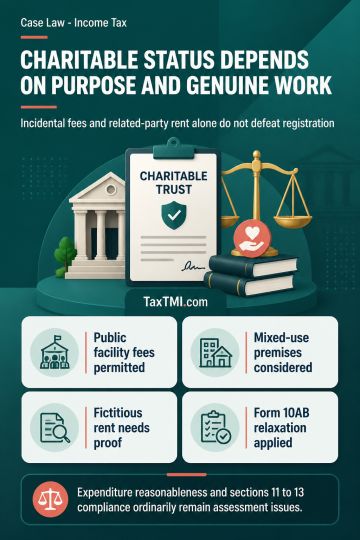
Charitable registration turns on predominant purpose and genuine activities, while incidental fees and related-party rent require supporting adverse m...
MAT book-profit adjustments exclude disallowances for exempt-income expenditure and demerger expenditure unless expressly listed under the statutory c...
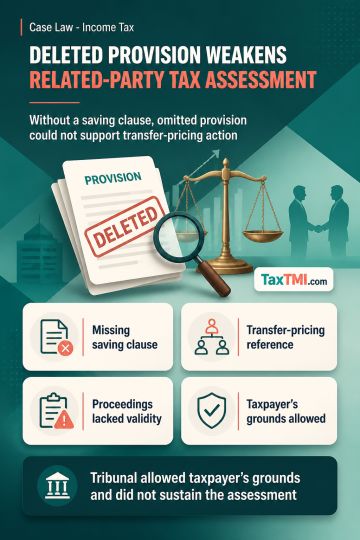
Omitted specified domestic transaction provision invalidates related-party expenditure transfer-pricing references and assessments based on consequent...
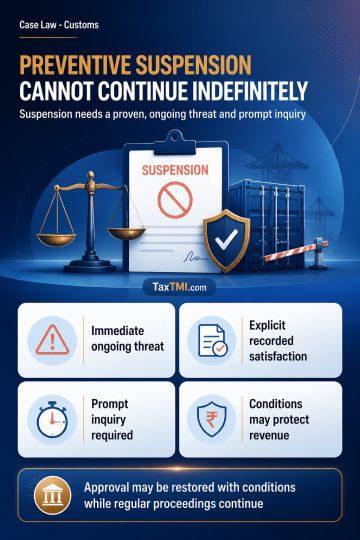
Preventive suspension requires an immediate continuing threat and cannot become indefinite without inquiry, fresh evidence, or proportionate safeguard...
ITAT held that commission paid for procuring bonds in a one-time...
Business expenditure disallowance failed where commission, related-party salary and promotion payments were supported by records and inquiry was inadequate.
Contents
Summary
Note
Bookmark
Share
✓ Copied successfully !
Print
Print Options
For full text, please login
Login to TaxTMI
Verification Pending
The Email Id has not been verified. Click on the link we have sent on
ITAT held that commission paid for procuring bonds in a one-time trading transaction was allowable as business expenditure where payments were made through banking channels with TDS, confirmations, PAN and bank details, and the underlying bond deal was not disputed; suspicion based on non-response of some parties or missing unspecified KYC material was insufficient, so the ad hoc disallowance was deleted. It also deleted disallowance of salary paid to a related party because no specific inquiry was made into the employee's qualifications, experience or work profile, and there was no finding of excessiveness. Business promotion expenditure paid to two HUFs was similarly allowed because invoices, bank payment and identity documents were on record, while the claim relating to Planwell Industries Corporation was not pressed.
ITAT held that commission paid for procuring bonds in a one-time trading transaction was allowable as business expenditure where payments were made through banking channels with TDS, confirmations, PAN and bank details, and the underlying bond deal was not disputed; suspicion based on non-response of some parties or missing unspecified KYC material was insufficient, so the ad hoc disallowance was deleted. It also deleted disallowance of salary paid to a related party because no specific inquiry was made into the employee's qualifications, experience or work profile, and there was no finding of excessiveness. Business promotion expenditure paid to two HUFs was similarly allowed because invoices, bank payment and identity documents were on record, while the claim relating to Planwell Industries Corporation was not pressed.
Note: It is a system-generated summary and is for quick reference only.
 TaxTMI
  TaxTMI
 of 4823















 Join Channel


