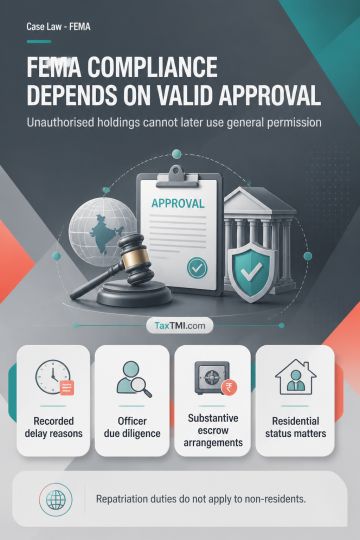
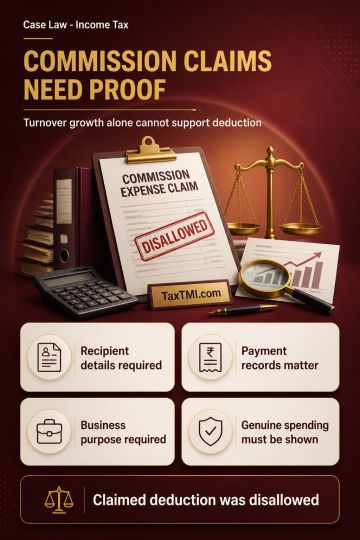
Business expenditure deduction requires proof of genuine commission payments and commercial allowability; turnover growth alone cannot validate the cl...
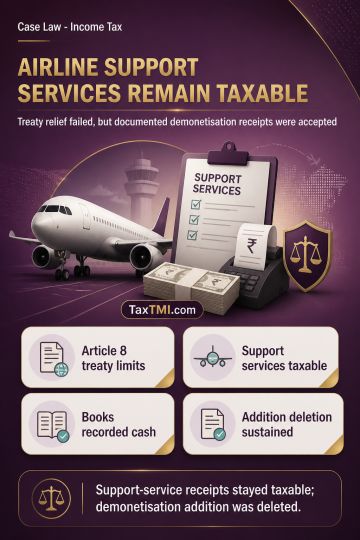
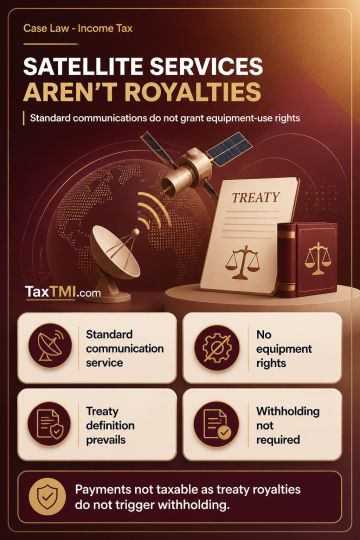
Article 8 treaty coverage excluded third-party airline support services, while documented demonetisation cash receipts remained accepted business inco...
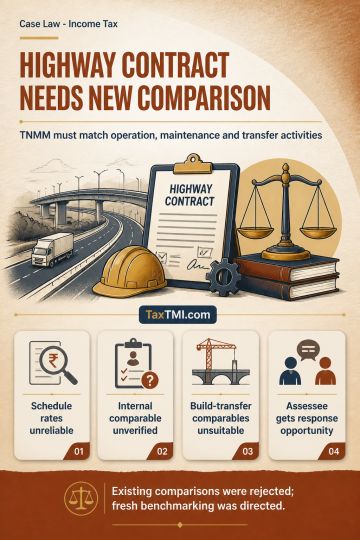
Functional comparability under TNMM requires highway contract benchmarks to reflect operation, maintenance and transfer activities, requiring fresh be...
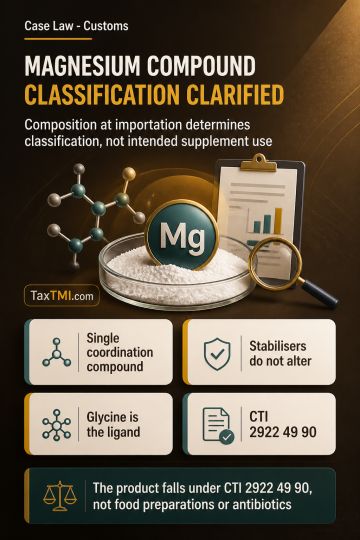
Objective characteristics govern magnesium bis-glycinate chelate classification as an amino-acid coordination compound, not a food preparation or anti...
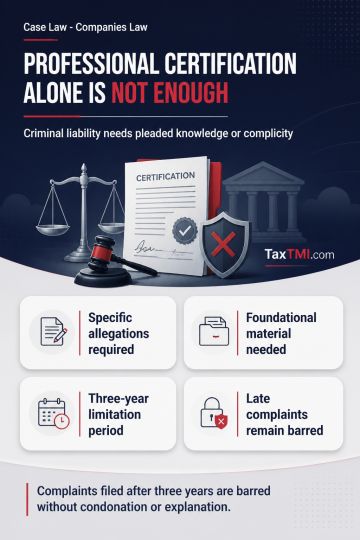
Independent professional certification requires pleaded knowledge or complicity for criminal liability; untimely complaints remain barred by limitatio...
Service tax demand based solely on Form 26AS was unsustainable because taxability had to be determined from the statute, relevant records and exemption materials, not inferred from third-party information. The Court held that the authorities failed to examine the plea that the receipts related to government works contracts covered by exemption and therefore did not establish any taxable liability under the Finance Act, 1994. It also held that the extended limitation period could be invoked only on the statutory grounds of fraud, suppression or intent to evade, none of which were properly found. The writ petition was maintainable despite an alternative appeal remedy because the impugned proceedings suffered from jurisdictional error and patent legal infirmity, and the demand, interest and penalty were quashed.
Service tax demand based solely on Form 26AS was unsustainable because taxability had to be determined from the statute, relevant records and exemption materials, not inferred from third-party information. The Court held that the authorities failed to examine the plea that the receipts related to government works contracts covered by exemption and therefore did not establish any taxable liability under the Finance Act, 1994. It also held that the extended limitation period could be invoked only on the statutory grounds of fraud, suppression or intent to evade, none of which were properly found. The writ petition was maintainable despite an alternative appeal remedy because the impugned proceedings suffered from jurisdictional error and patent legal infirmity, and the demand, interest and penalty were quashed.
Note: It is a system-generated summary and is for quick reference only.
 TaxTMI
  TaxTMI
 of 4819








 Join Channel