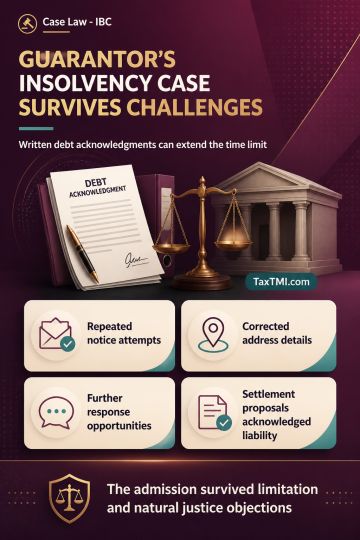
Service of notice and contractual debt acknowledgment preserved insolvency admission against a corporate guarantor despite limitation and natural just...
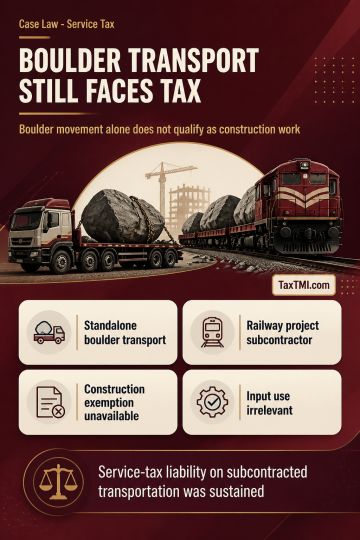
Original works exemption excludes standalone boulder transportation, leaving subcontracted railway-project transport services subject to service tax l...
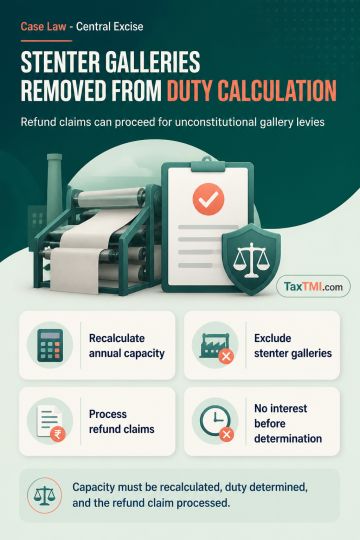
Annual production capacity determinations excluding stenter galleries support refunds for unconstitutional excise levies without an unjust-enrichment ...
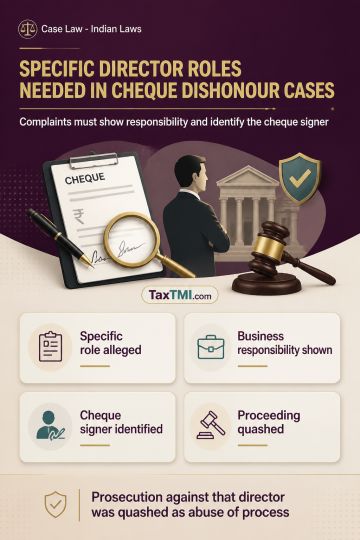
Vicarious liability for cheque dishonour requires specific allegations of responsibility and cheque signatory; generic director allegations cannot sus...
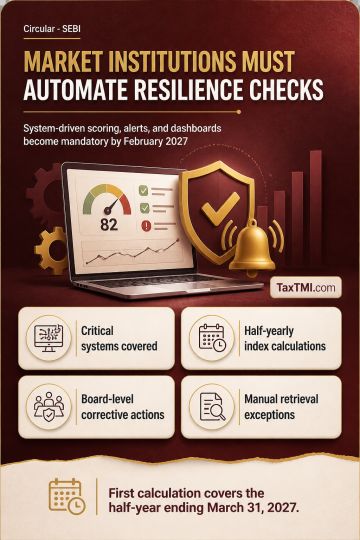
IT Resilience Index requires market infrastructure institutions to automate resilience scoring, early warnings, and continuous service-delivery monito...
Service tax demand based solely on Form 26AS was unsustainable because taxability had to be determined from the statute, relevant records and exemption materials, not inferred from third-party information. The Court held that the authorities failed to examine the plea that the receipts related to government works contracts covered by exemption and therefore did not establish any taxable liability under the Finance Act, 1994. It also held that the extended limitation period could be invoked only on the statutory grounds of fraud, suppression or intent to evade, none of which were properly found. The writ petition was maintainable despite an alternative appeal remedy because the impugned proceedings suffered from jurisdictional error and patent legal infirmity, and the demand, interest and penalty were quashed.
Service tax demand based solely on Form 26AS was unsustainable because taxability had to be determined from the statute, relevant records and exemption materials, not inferred from third-party information. The Court held that the authorities failed to examine the plea that the receipts related to government works contracts covered by exemption and therefore did not establish any taxable liability under the Finance Act, 1994. It also held that the extended limitation period could be invoked only on the statutory grounds of fraud, suppression or intent to evade, none of which were properly found. The writ petition was maintainable despite an alternative appeal remedy because the impugned proceedings suffered from jurisdictional error and patent legal infirmity, and the demand, interest and penalty were quashed.
Note: It is a system-generated summary and is for quick reference only.
 TaxTMI
  TaxTMI
 of 4828







 Join Channel