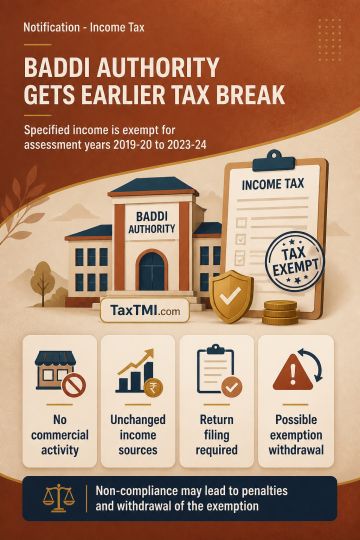
Specified development authority income receives retrospective tax exemption, subject to non-commercial activity, unchanged income sources, and return-...
Unified Brand India framework introduces voluntary Trust Mark certification and funding support for export branding, packaging and global promotional ...
Origin Declaration authentication governs preferential tariff claims under India-UK CETA, requiring a validated reference number before import clearan...
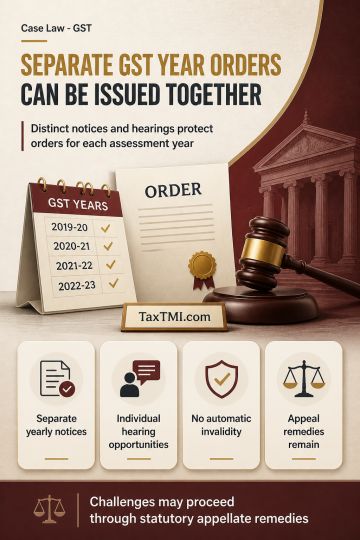
Separate assessment orders for different years remain valid when distinct notices and hearing opportunities prevent prejudice from combined proceeding...
Defined public benefit can retain charitable character; registration renewal requires examining genuine activities and legal compliance, not surplus a...
Capital reduction is distinct from share buy-back, preventing buy-back tax; restructuring interest and related business deductions also survive scruti...
No duty was payable on free warranty replacement inputs where the value of warranty was already embedded in the final product and the cleared goods fell within the scope of inputs used for providing free warranty under Notification No. 3/2011-CE (NT). The Tribunal held that the appellant's differential treatment between removed inputs and manufactured goods did not justify a duty demand, and the demand was unsustainable. On debit notes raised for repair charges on damaged inputs, the Tribunal found no evidence that the inputs were not subsequently used in manufacture; in the absence of proof of non-use, CENVAT credit remained admissible and duty could not be demanded on that basis. The impugned order was set aside and the appeal allowed.
No duty was payable on free warranty replacement inputs where the value of warranty was already embedded in the final product and the cleared goods fell within the scope of inputs used for providing free warranty under Notification No. 3/2011-CE (NT). The Tribunal held that the appellant's differential treatment between removed inputs and manufactured goods did not justify a duty demand, and the demand was unsustainable. On debit notes raised for repair charges on damaged inputs, the Tribunal found no evidence that the inputs were not subsequently used in manufacture; in the absence of proof of non-use, CENVAT credit remained admissible and duty could not be demanded on that basis. The impugned order was set aside and the appeal allowed.
Note: It is a system-generated summary and is for quick reference only.
 TaxTMI
  TaxTMI
 of 4817














 Join Channel


