Donor-directed corpus contributions retain capital character despite exemption claims under section 10(23C)(vi), preventing their treatment as taxable...
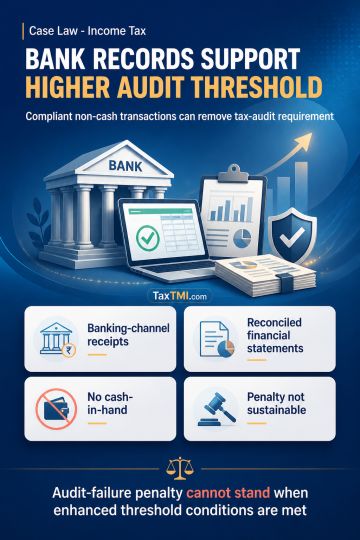
Enhanced tax-audit threshold applies where banking records establish compliant non-cash receipts and payments, eliminating penalty exposure for audit ...
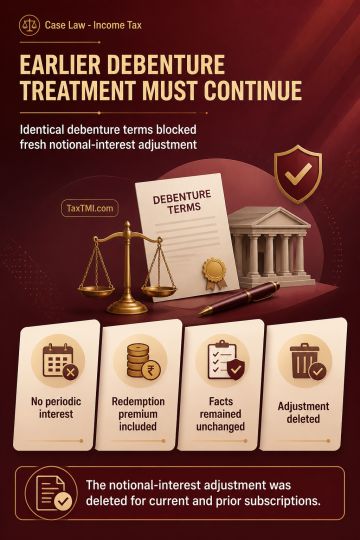
Transfer pricing consistency protects identical non-interest-bearing debenture terms from a later notional-interest adjustment without valid statutory...
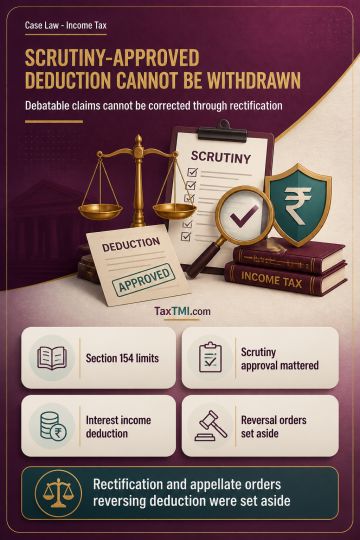
Rectification of debatable deduction claims cannot reverse scrutiny-approved co-operative society interest income deductions as apparent record errors...
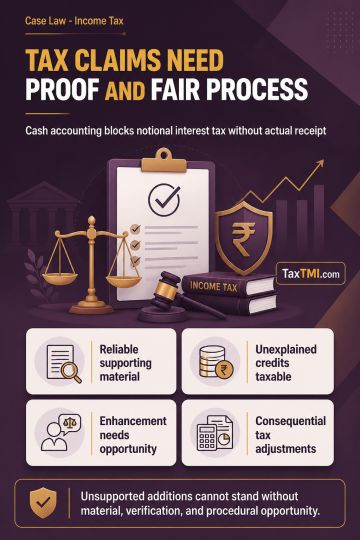
Cash-method accounting bars presumptive interest taxation, while unsupported securities and share-trading additions require reliable material and veri...
No duty was payable on free warranty replacement inputs where the value of warranty was already embedded in the final product and the cleared goods fell within the scope of inputs used for providing free warranty under Notification No. 3/2011-CE (NT). The Tribunal held that the appellant's differential treatment between removed inputs and manufactured goods did not justify a duty demand, and the demand was unsustainable. On debit notes raised for repair charges on damaged inputs, the Tribunal found no evidence that the inputs were not subsequently used in manufacture; in the absence of proof of non-use, CENVAT credit remained admissible and duty could not be demanded on that basis. The impugned order was set aside and the appeal allowed.
No duty was payable on free warranty replacement inputs where the value of warranty was already embedded in the final product and the cleared goods fell within the scope of inputs used for providing free warranty under Notification No. 3/2011-CE (NT). The Tribunal held that the appellant's differential treatment between removed inputs and manufactured goods did not justify a duty demand, and the demand was unsustainable. On debit notes raised for repair charges on damaged inputs, the Tribunal found no evidence that the inputs were not subsequently used in manufacture; in the absence of proof of non-use, CENVAT credit remained admissible and duty could not be demanded on that basis. The impugned order was set aside and the appeal allowed.
Note: It is a system-generated summary and is for quick reference only.
 TaxTMI
  TaxTMI
 of 4828








 Join Channel