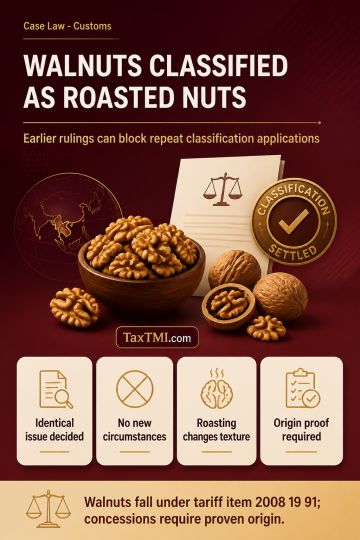
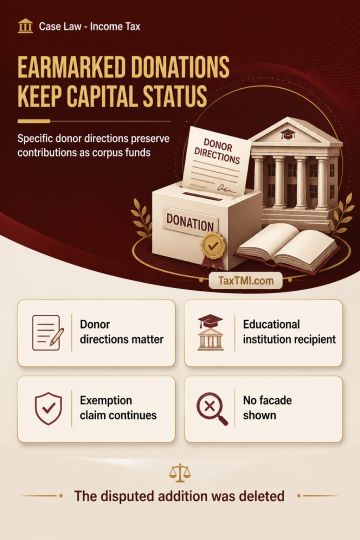
Donor-directed corpus contributions retain capital character despite exemption claims under section 10(23C)(vi), preventing their treatment as taxable...
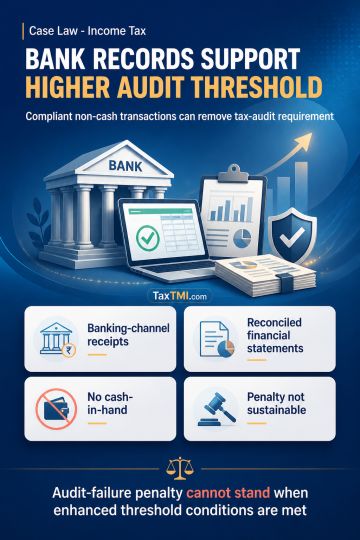
Enhanced tax-audit threshold applies where banking records establish compliant non-cash receipts and payments, eliminating penalty exposure for audit ...
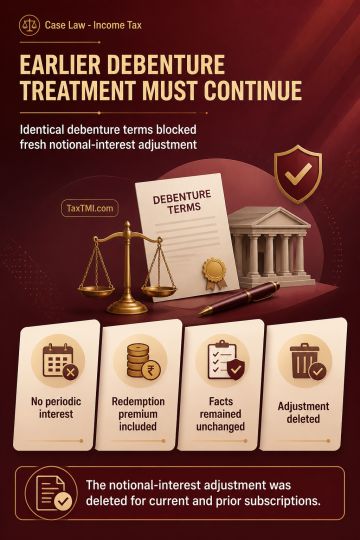
Transfer pricing consistency protects identical non-interest-bearing debenture terms from a later notional-interest adjustment without valid statutory...
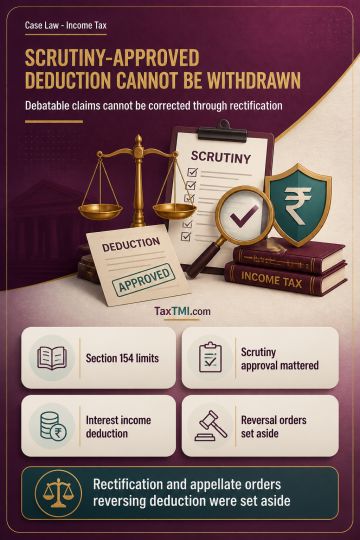
Rectification of debatable deduction claims cannot reverse scrutiny-approved co-operative society interest income deductions as apparent record errors...
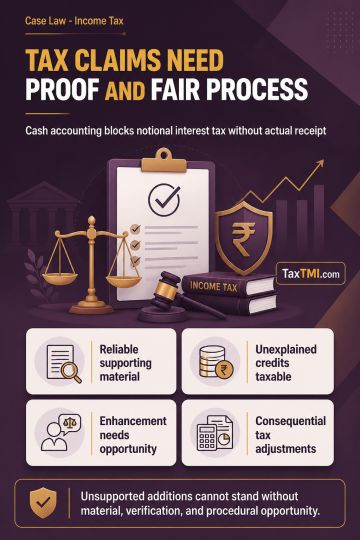
Cash-method accounting bars presumptive interest taxation, while unsupported securities and share-trading additions require reliable material and veri...
For section 80-IA, the market value of captive power had to be benchmarked to the tariff charged by the State Electricity Board to industrial consumers, including the electricity duty component, and not to the assessee's sale price for surplus power; the assessee therefore succeeded on quantification. Deduction under section 80-IA did not require any reduction from profits eligible under section 80HHC, so the assessee also succeeded on that computation issue. For section 115JB, the entire profits eligible under section 80HHC had to be excluded from book profit, as the phased restriction in section 80HHC(1B) did not govern MAT computation. Applying the purpose test, sales tax remission linked to industrial expansion in backward areas was held to be a capital receipt and excludible from book profit.
For section 80-IA, the market value of captive power had to be benchmarked to the tariff charged by the State Electricity Board to industrial consumers, including the electricity duty component, and not to the assessee's sale price for surplus power; the assessee therefore succeeded on quantification. Deduction under section 80-IA did not require any reduction from profits eligible under section 80HHC, so the assessee also succeeded on that computation issue. For section 115JB, the entire profits eligible under section 80HHC had to be excluded from book profit, as the phased restriction in section 80HHC(1B) did not govern MAT computation. Applying the purpose test, sales tax remission linked to industrial expansion in backward areas was held to be a capital receipt and excludible from book profit.
Note: It is a system-generated summary and is for quick reference only.
 TaxTMI
  TaxTMI
 of 4826






 Join Channel