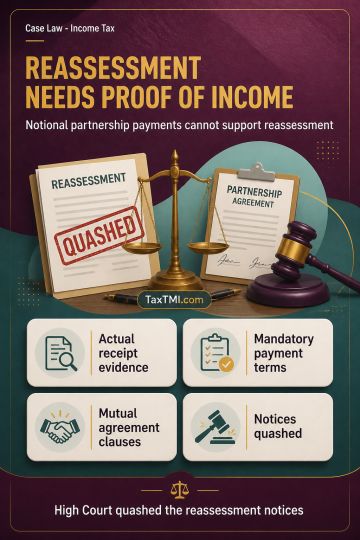
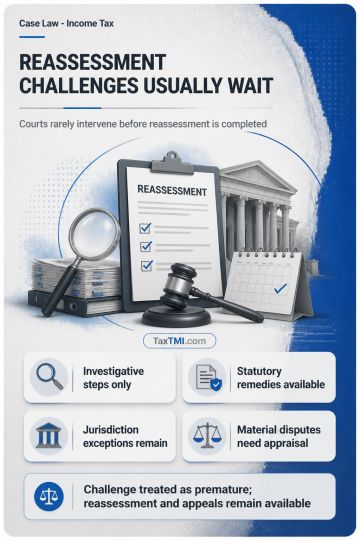
Preliminary reassessment proceedings generally require statutory remedies unless jurisdiction is wholly absent or mandatory conditions are patently br...
Agricultural land classification requires cumulative factual indicators, while industrial-purpose land and absent agricultural use defeat reinvestment...
For section 80-IA, the market value of captive power had to be benchmarked to the tariff charged by the State Electricity Board to industrial consumers, including the electricity duty component, and not to the assessee's sale price for surplus power; the assessee therefore succeeded on quantification. Deduction under section 80-IA did not require any reduction from profits eligible under section 80HHC, so the assessee also succeeded on that computation issue. For section 115JB, the entire profits eligible under section 80HHC had to be excluded from book profit, as the phased restriction in section 80HHC(1B) did not govern MAT computation. Applying the purpose test, sales tax remission linked to industrial expansion in backward areas was held to be a capital receipt and excludible from book profit.
For section 80-IA, the market value of captive power had to be benchmarked to the tariff charged by the State Electricity Board to industrial consumers, including the electricity duty component, and not to the assessee's sale price for surplus power; the assessee therefore succeeded on quantification. Deduction under section 80-IA did not require any reduction from profits eligible under section 80HHC, so the assessee also succeeded on that computation issue. For section 115JB, the entire profits eligible under section 80HHC had to be excluded from book profit, as the phased restriction in section 80HHC(1B) did not govern MAT computation. Applying the purpose test, sales tax remission linked to industrial expansion in backward areas was held to be a capital receipt and excludible from book profit.
Note: It is a system-generated summary and is for quick reference only.
 TaxTMI
  TaxTMI
 of 4826








 Join Channel


