Service permanent establishment requires non-auxiliary services, while arm's-length distributor remuneration precludes further profit attribution in I...
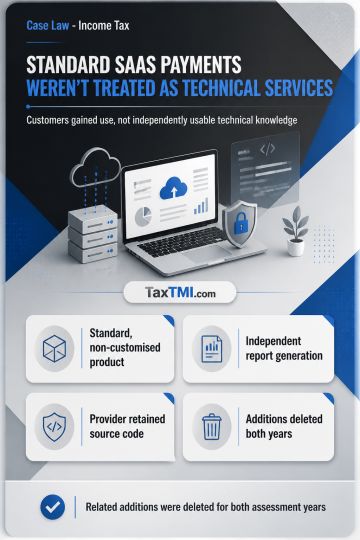
Make-available condition excludes standard SaaS subscription receipts where customers receive no independently usable technical knowledge after subscr...
Anonymous donation classification fails where charitable trusts maintain undisputed donor identity records and evidence corpus contributions' intended...
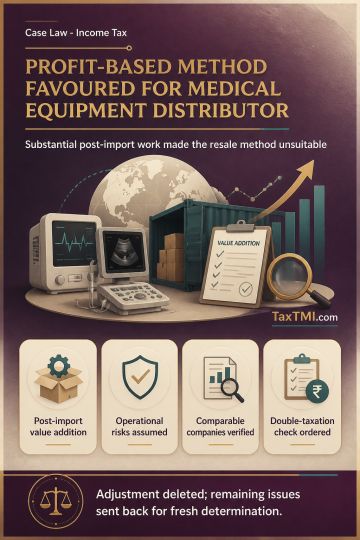
Transfer pricing method selection favours TNMM where medical-equipment distribution involves substantial post-import value addition and operational ri...
Post-export shipping bill conversion remains available where contemporaneous evidence supports EPCG benefits despite curable procedural omissions and ...
Section 251(1) enhancement power was confined to matters or sources of income considered by the Assessing Officer; the CIT(A) could not introduce a fresh issue by reducing work-in-progress on a point never examined in assessment, so the enhancement was invalid and reversed. Receipts under the joint development arrangement were treated as security deposits and business receipts, not loans or advances, and deemed dividend under section 2(22)(e) could be taxed only in the hands of a shareholder; as the assessee was neither a registered nor beneficial shareholder, the addition was deleted. For the joint development agreement, the asset was stock-in-trade and income had to be measured by the consideration actually receivable under the arrangement, not by stamp duty value of the entire land parcel, so the protective addition for alleged extra consideration was affirmed as deleted.
Section 251(1) enhancement power was confined to matters or sources of income considered by the Assessing Officer; the CIT(A) could not introduce a fresh issue by reducing work-in-progress on a point never examined in assessment, so the enhancement was invalid and reversed. Receipts under the joint development arrangement were treated as security deposits and business receipts, not loans or advances, and deemed dividend under section 2(22)(e) could be taxed only in the hands of a shareholder; as the assessee was neither a registered nor beneficial shareholder, the addition was deleted. For the joint development agreement, the asset was stock-in-trade and income had to be measured by the consideration actually receivable under the arrangement, not by stamp duty value of the entire land parcel, so the protective addition for alleged extra consideration was affirmed as deleted.
Note: It is a system-generated summary and is for quick reference only.
 TaxTMI
  TaxTMI
 of 4826



















 Join Channel