Retention of seized property survives where recorded reasons support proceeds of crime, while stayed investigation periods are excluded from limitatio...
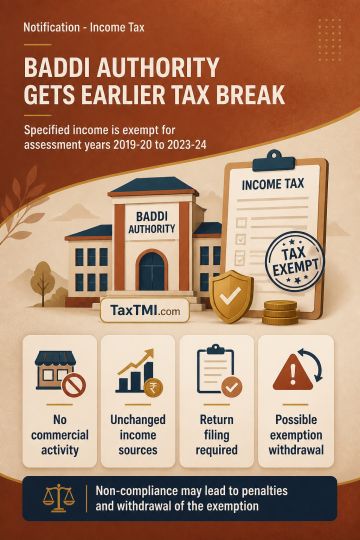
Specified income of Baddi Barotiwala Nalagarh Development Authority receives conditional tax exemption, retrospectively covering its designated assess...
Specified development authority income receives retrospective tax exemption, subject to non-commercial activity, unchanged income sources, and return-...
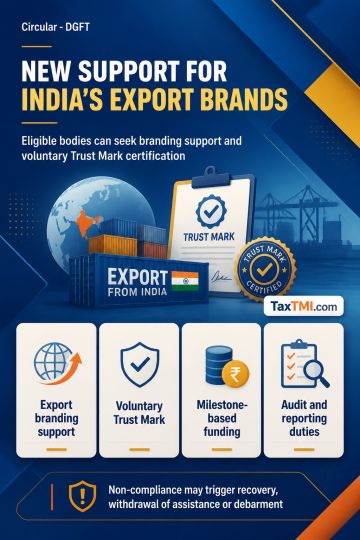
Unified Brand India framework introduces voluntary Trust Mark certification and funding support for export branding, packaging and global promotional ...
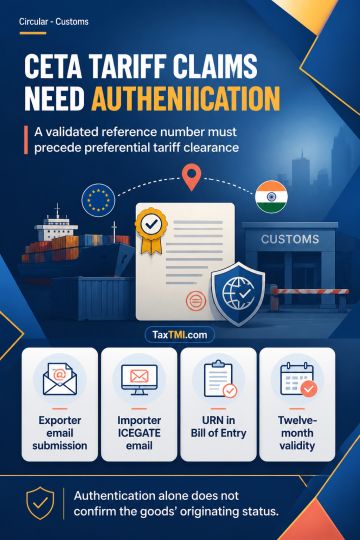
Origin Declaration authentication governs preferential tariff claims under India-UK CETA, requiring a validated reference number before import clearan...
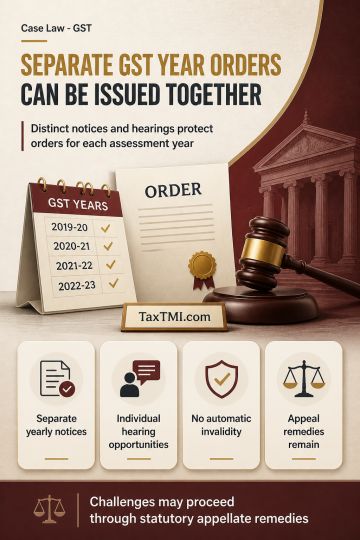
Separate assessment orders for different years remain valid when distinct notices and hearing opportunities prevent prejudice from combined proceeding...
Seized drone components were not shown on the record to constitute complete drones imported in CKD/SKD condition, as the quantities were uneven, imports were spread across multiple Bills of Entry, some parts were domestically procured, and the engineering report was inconclusive. Applying the principle that CKD/SKD treatment requires proof of complete units dismantled for reassembly, and that Customs Tariff interpretation rules cannot be used to read Foreign Trade Policy conditions, the Tribunal rejected the prohibition basis for refusal of provisional release. It also found no factual foundation for invoking public safety or national security, and held that the CBIC circular could not override the statutory scheme. Conditional provisional release was therefore directed.
Seized drone components were not shown on the record to constitute complete drones imported in CKD/SKD condition, as the quantities were uneven, imports were spread across multiple Bills of Entry, some parts were domestically procured, and the engineering report was inconclusive. Applying the principle that CKD/SKD treatment requires proof of complete units dismantled for reassembly, and that Customs Tariff interpretation rules cannot be used to read Foreign Trade Policy conditions, the Tribunal rejected the prohibition basis for refusal of provisional release. It also found no factual foundation for invoking public safety or national security, and held that the CBIC circular could not override the statutory scheme. Conditional provisional release was therefore directed.
Note: It is a system-generated summary and is for quick reference only.
 TaxTMI
  TaxTMI
 of 4816










 Join Channel