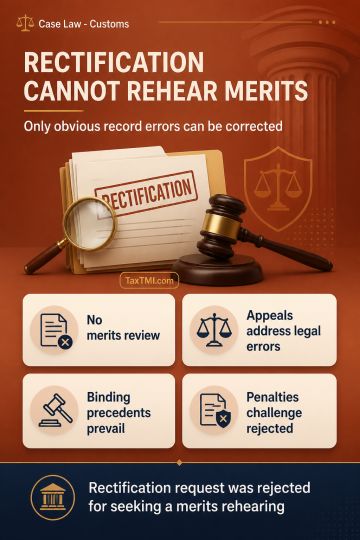
Rectification of mistake remains limited to self-evident record errors, preventing merits review through miscellaneous applications and preserving fin...
Tender creditworthiness conditions may extend to de facto Promoter Directors, with post-participation challenges generally barred absent arbitrariness...
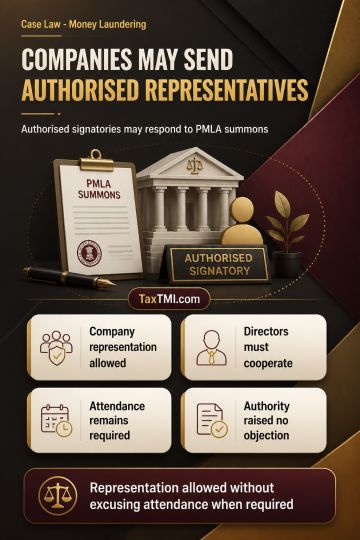
Corporate representation in PMLA summons proceedings permitted through an authorised signatory, subject to directors' continuing cooperation and atten...
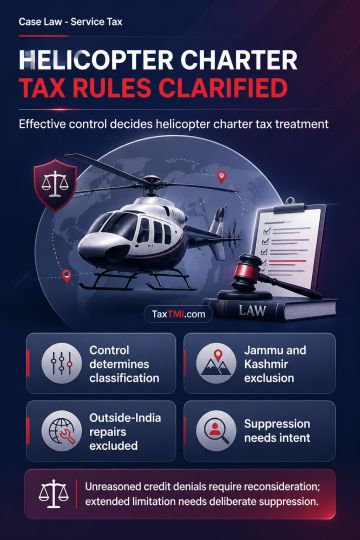
Helicopter charter classification requires effective control analysis, while territorial performance, reasoned credit orders and wilful suppression de...
Specified fund definition expands PAN exemption eligibility for registered alternative investment funds and qualifying International Financial Service...
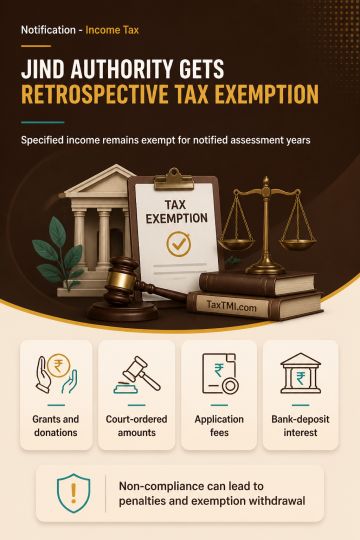
Tax exemption for specified legal-services authority income applies retrospectively, subject to non-commercial activity, unchanged income sources, and...
Seized drone components were not shown on the record to constitute complete drones imported in CKD/SKD condition, as the quantities were uneven, imports were spread across multiple Bills of Entry, some parts were domestically procured, and the engineering report was inconclusive. Applying the principle that CKD/SKD treatment requires proof of complete units dismantled for reassembly, and that Customs Tariff interpretation rules cannot be used to read Foreign Trade Policy conditions, the Tribunal rejected the prohibition basis for refusal of provisional release. It also found no factual foundation for invoking public safety or national security, and held that the CBIC circular could not override the statutory scheme. Conditional provisional release was therefore directed.
Seized drone components were not shown on the record to constitute complete drones imported in CKD/SKD condition, as the quantities were uneven, imports were spread across multiple Bills of Entry, some parts were domestically procured, and the engineering report was inconclusive. Applying the principle that CKD/SKD treatment requires proof of complete units dismantled for reassembly, and that Customs Tariff interpretation rules cannot be used to read Foreign Trade Policy conditions, the Tribunal rejected the prohibition basis for refusal of provisional release. It also found no factual foundation for invoking public safety or national security, and held that the CBIC circular could not override the statutory scheme. Conditional provisional release was therefore directed.
Note: It is a system-generated summary and is for quick reference only.
 TaxTMI
  TaxTMI
 of 4817










 Join Channel