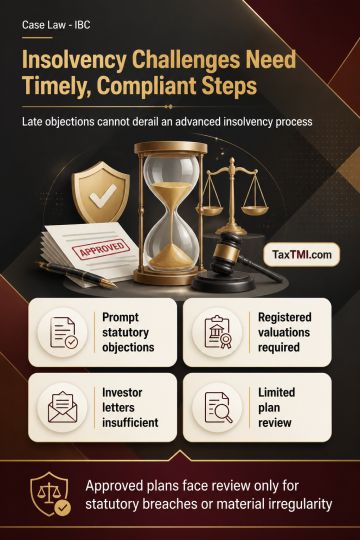
Clean slate principle extinguishes uncrystallised operational claims and bars continuation of pending recovery and arbitral proceedings after plan app...
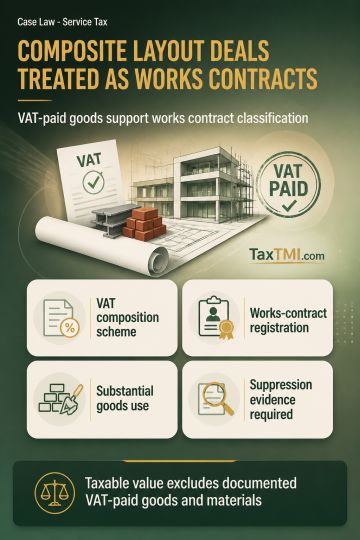
Works contract classification governs composite layout-development contracts where VAT-paid goods are transferred alongside construction and infrastru...
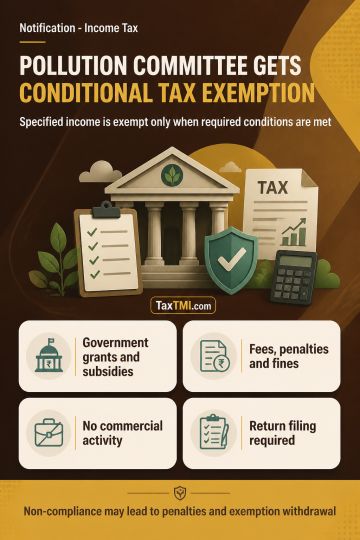
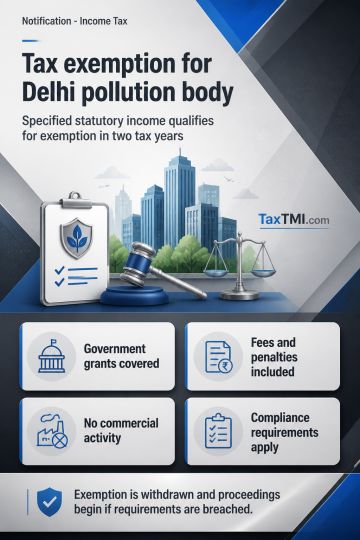
Specified income tax exemption for pollution control body remains conditional on non-commercial activity, unchanged income character, and return filin...
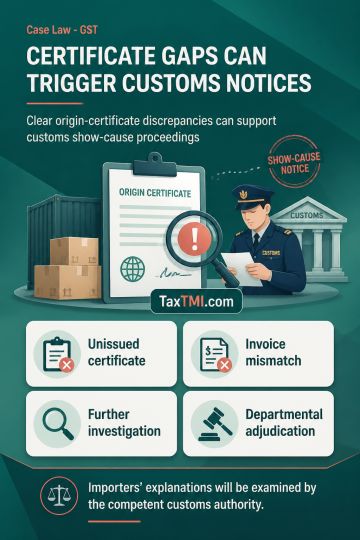
Jurisdictional facts in certificate-of-origin discrepancies can support customs show-cause proceedings, leaving factual explanations for departmental ...
Imported fabric was classified as polyester cut pile fabric on the basis of the Textile Committee report and the importer's own manufacturing descriptions showing loops cut to form pile. In the absence of any contrary test report, there was no reason to reject the expert report or require a retest, and the importer had no right to dictate the mode of testing. The reclassification and consequential duty demand on both Bills of Entry were sustained. On penalty, the tribunal held that the mandatory penalty equal to duty under section 114A had been omitted for one Bill of Entry, so the order required modification to extend the penalty to the additional differential duty.
Imported fabric was classified as polyester cut pile fabric on the basis of the Textile Committee report and the importer's own manufacturing descriptions showing loops cut to form pile. In the absence of any contrary test report, there was no reason to reject the expert report or require a retest, and the importer had no right to dictate the mode of testing. The reclassification and consequential duty demand on both Bills of Entry were sustained. On penalty, the tribunal held that the mandatory penalty equal to duty under section 114A had been omitted for one Bill of Entry, so the order required modification to extend the penalty to the additional differential duty.
Note: It is a system-generated summary and is for quick reference only.
 TaxTMI
  TaxTMI
 of 4817









 Join Channel