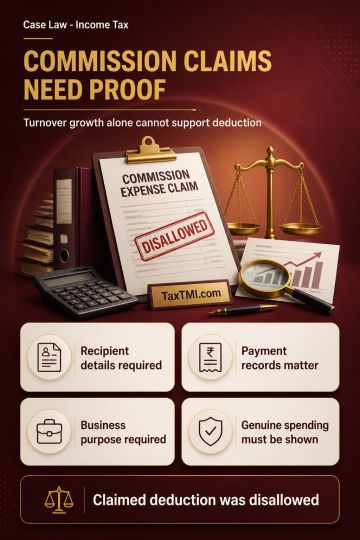
Business expenditure deduction requires proof of genuine commission payments and commercial allowability; turnover growth alone cannot validate the cl...
Article 8 treaty coverage excluded third-party airline support services, while documented demonetisation cash receipts remained accepted business inco...
Functional comparability under TNMM requires highway contract benchmarks to reflect operation, maintenance and transfer activities, requiring fresh be...
A foreign judgment is conclusive in India only if rendered after due judicial process, with a reasonable opportunity to defend and genuine consideration of substantive defences. The English decree failed this test because the respondent raised bona fide triable issues supported by contemporaneous documents, yet was denied leave to defend in summary proceedings; it was therefore not a judgment on merits and offended natural justice under Section 13 CPC, making it unenforceable under Section 44A read with Section 13 CPC. The Court further clarified that FERA does not bar adjudication of liability, but enforcement of a decree remains subject to prior regulatory permission under Section 47(3)(b).
A foreign judgment is conclusive in India only if rendered after due judicial process, with a reasonable opportunity to defend and genuine consideration of substantive defences. The English decree failed this test because the respondent raised bona fide triable issues supported by contemporaneous documents, yet was denied leave to defend in summary proceedings; it was therefore not a judgment on merits and offended natural justice under Section 13 CPC, making it unenforceable under Section 44A read with Section 13 CPC. The Court further clarified that FERA does not bar adjudication of liability, but enforcement of a decree remains subject to prior regulatory permission under Section 47(3)(b).
Note: It is a system-generated summary and is for quick reference only.
 TaxTMI
  TaxTMI
 of 4817
















 Join Channel


