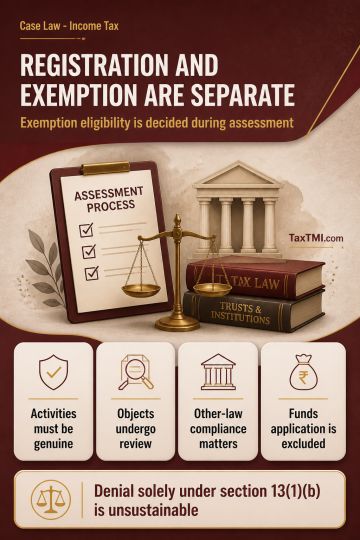
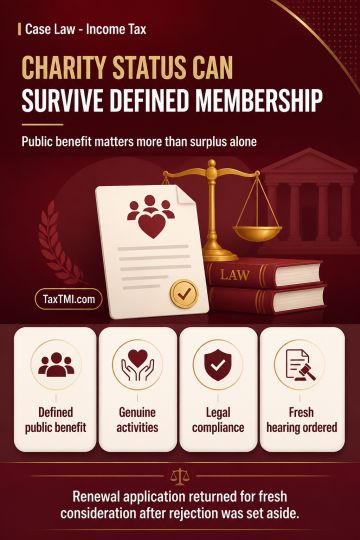
Defined public benefit can retain charitable character; registration renewal requires examining genuine activities and legal compliance, not surplus a...
Capital reduction is distinct from share buy-back, preventing buy-back tax; restructuring interest and related business deductions also survive scruti...
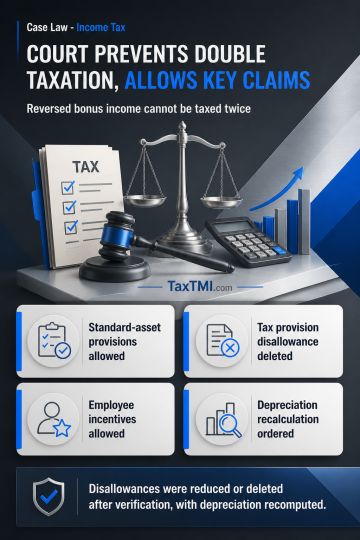
Transfer pricing and tax deductions upheld on established principles, while employee contributions and warranty provisions returned for fresh examinat...
Captive transfer pricing relies on industrial consumer tariffs, while genuine quotations can benchmark effluent treatment transfers under the Other Me...
The High Court held that the limitation provision applicable to refund claims is the one in force on the date of the underlying transaction, so the amended Explanation 2(e) to Section 54 of the CGST Act could not retrospectively curtail refund rights for periods before 1 February 2019. It further held that refund of unutilised input tax credit on zero-rated supplies is governed by Explanation 2(e), not Explanation 2(a), because such claims depend on credit accrual, ledger reflection, return filing and remaining unutilised. The orders rejecting the claims as time-barred were set aside and the refund applications were directed to be processed on merits.
The High Court held that the limitation provision applicable to refund claims is the one in force on the date of the underlying transaction, so the amended Explanation 2(e) to Section 54 of the CGST Act could not retrospectively curtail refund rights for periods before 1 February 2019. It further held that refund of unutilised input tax credit on zero-rated supplies is governed by Explanation 2(e), not Explanation 2(a), because such claims depend on credit accrual, ledger reflection, return filing and remaining unutilised. The orders rejecting the claims as time-barred were set aside and the refund applications were directed to be processed on merits.
Note: It is a system-generated summary and is for quick reference only.
 TaxTMI
  TaxTMI
 of 4819














 Join Channel


