Approved resolution plans extinguish unsubmitted pre-approval tax claims, preventing later recovery outside the insolvency process and preserving a cl...
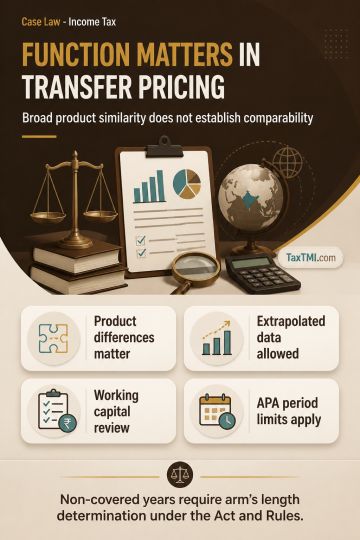
Transfer pricing comparability requires functional alignment and permits working capital adjustment, while APA margins cannot govern non-covered years...
Treaty benefit, goodwill depreciation and hedging costs: export commission disallowed, while key business deductions and depreciation claims succeeded...
Undisclosed foreign asset classification requires an unexplained source; unrebutted affidavits and corroborative evidence defeated the Black Money Act...
The High Court held that the limitation provision applicable to refund claims is the one in force on the date of the underlying transaction, so the amended Explanation 2(e) to Section 54 of the CGST Act could not retrospectively curtail refund rights for periods before 1 February 2019. It further held that refund of unutilised input tax credit on zero-rated supplies is governed by Explanation 2(e), not Explanation 2(a), because such claims depend on credit accrual, ledger reflection, return filing and remaining unutilised. The orders rejecting the claims as time-barred were set aside and the refund applications were directed to be processed on merits.
The High Court held that the limitation provision applicable to refund claims is the one in force on the date of the underlying transaction, so the amended Explanation 2(e) to Section 54 of the CGST Act could not retrospectively curtail refund rights for periods before 1 February 2019. It further held that refund of unutilised input tax credit on zero-rated supplies is governed by Explanation 2(e), not Explanation 2(a), because such claims depend on credit accrual, ledger reflection, return filing and remaining unutilised. The orders rejecting the claims as time-barred were set aside and the refund applications were directed to be processed on merits.
Note: It is a system-generated summary and is for quick reference only.
 TaxTMI
  TaxTMI
 of 4821













 Join Channel