Transitioned CENVAT credit may validly satisfy mandatory pre-deposit requirements for legacy service tax appeals through Electronic Credit Ledger debi...
Building-plan sanction charges require statutory authority; unauthorised fees and GST were quashed, while labour cess must follow prescribed collectio...
Pure-agent exclusion fails where hotel booking facilitators receive third-party services themselves, making entire customer consideration taxable as r...
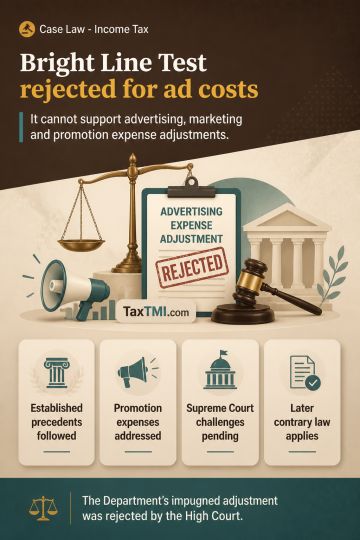
Transfer pricing requires evidence for AMP transactions, functionally reliable comparables, and appropriate aggregation or Berry Ratio benchmarking me...
Revisionary jurisdiction cannot reopen share capital assessments where adequate inquiry supports a permissible view and no independent error is establ...
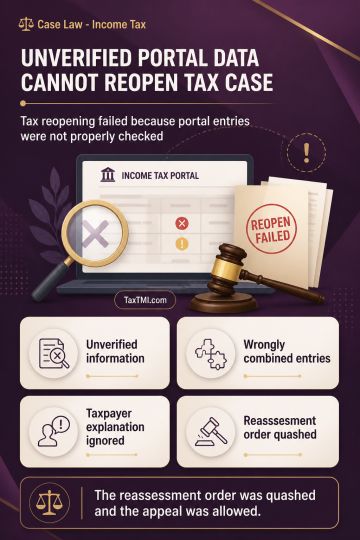
Reassessment jurisdiction fails where unverified portal information is aggregated without examining the taxpayer's explanation or relevance of entries...
Statutory sanction for delayed reassessment requires approval from the prescribed authority; approval by an inferior authority invalidates jurisdictio...
An advance ruling under the GST law is binding on the applicant, but that binding effect does not bar High Court review under Article 226 on limited grounds such as jurisdictional error, error of law, breach of natural justice or perversity; such challenges to advance rulings should be listed before the Division Bench, not a Single Judge. On classification, the Court held that retaining the impugned view on cut tobacco would create unequal tax treatment for similarly placed manufacturers producing the same product, contrary to the equality principle. The advance rulings and the challenged order were set aside, and the writ appeal was allowed.
An advance ruling under the GST law is binding on the applicant, but that binding effect does not bar High Court review under Article 226 on limited grounds such as jurisdictional error, error of law, breach of natural justice or perversity; such challenges to advance rulings should be listed before the Division Bench, not a Single Judge. On classification, the Court held that retaining the impugned view on cut tobacco would create unequal tax treatment for similarly placed manufacturers producing the same product, contrary to the equality principle. The advance rulings and the challenged order were set aside, and the writ appeal was allowed.
Note: It is a system-generated summary and is for quick reference only.
 TaxTMI
  TaxTMI
 of 4821















 Join Channel


