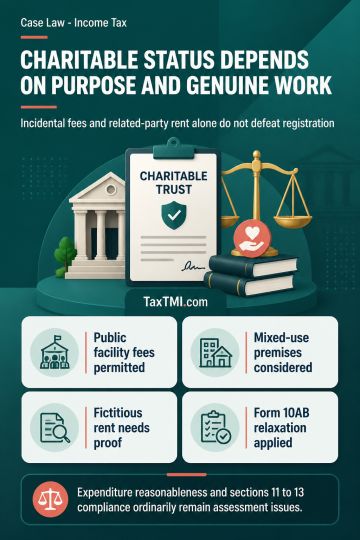
Charitable registration turns on predominant purpose and genuine activities, while incidental fees and related-party rent require supporting adverse m...
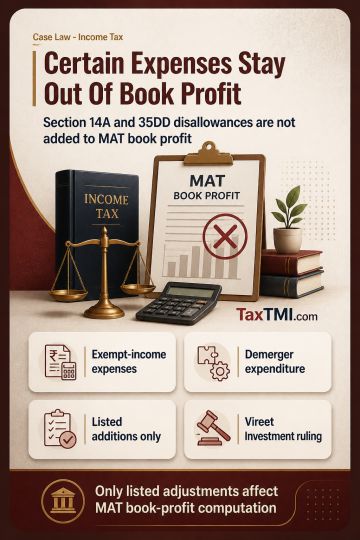
MAT book-profit adjustments exclude disallowances for exempt-income expenditure and demerger expenditure unless expressly listed under the statutory c...
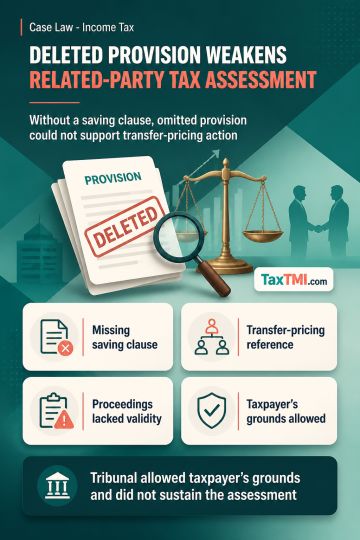
Omitted specified domestic transaction provision invalidates related-party expenditure transfer-pricing references and assessments based on consequent...
Where liability to incur construction expenditure had already accrued under the business transaction, the Court applied the mercantile system and the Calcutta Company principle to allow deduction of the estimated expense on accrual basis; the concurrent finding permitting the construction deduction was upheld. In the sale-and-lease-back arrangement involving cinematographic rights, title had passed to the assessee and the vendor thereafter remained only as lessee; mere tax-saving motive, unsupported by material, did not make the transaction a colourable device. Depreciation on the films was therefore allowed, and the Revenue failed on both issues.
Where liability to incur construction expenditure had already accrued under the business transaction, the Court applied the mercantile system and the Calcutta Company principle to allow deduction of the estimated expense on accrual basis; the concurrent finding permitting the construction deduction was upheld. In the sale-and-lease-back arrangement involving cinematographic rights, title had passed to the assessee and the vendor thereafter remained only as lessee; mere tax-saving motive, unsupported by material, did not make the transaction a colourable device. Depreciation on the films was therefore allowed, and the Revenue failed on both issues.
Note: It is a system-generated summary and is for quick reference only.
 TaxTMI
  TaxTMI
 of 4824








 Join Channel