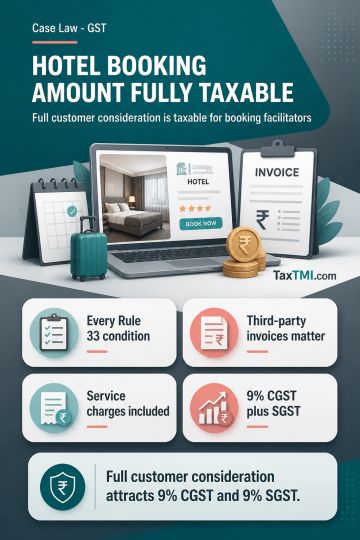
Pure-agent exclusion fails where hotel booking facilitators receive third-party services themselves, making entire customer consideration taxable as r...
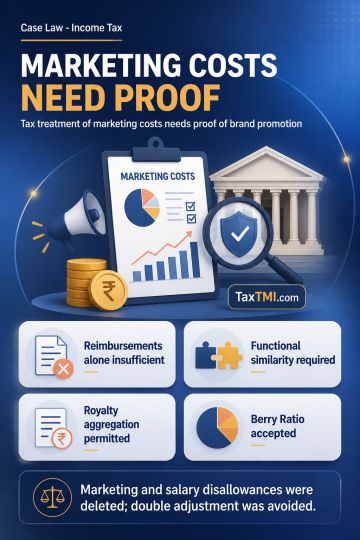
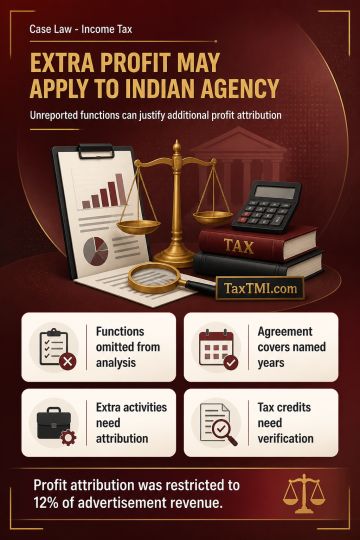
Transfer pricing requires evidence for AMP transactions, functionally reliable comparables, and appropriate aggregation or Berry Ratio benchmarking me...
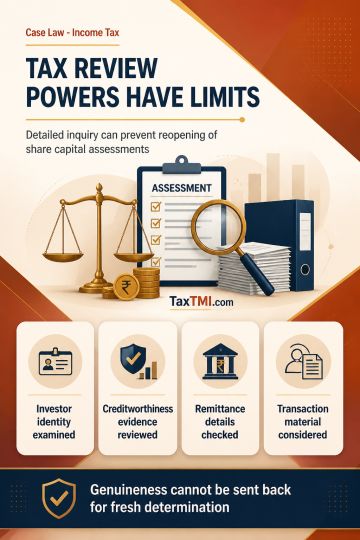
Revisionary jurisdiction cannot reopen share capital assessments where adequate inquiry supports a permissible view and no independent error is establ...
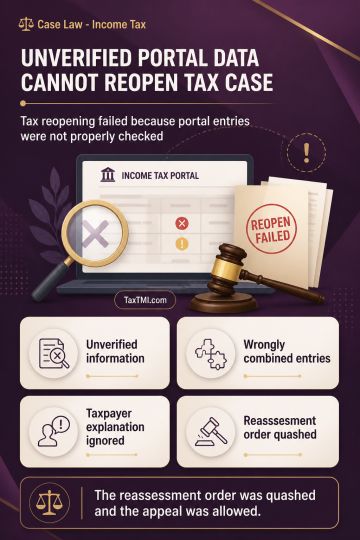
Reassessment jurisdiction fails where unverified portal information is aggregated without examining the taxpayer's explanation or relevance of entries...
Statutory sanction for delayed reassessment requires approval from the prescribed authority; approval by an inferior authority invalidates jurisdictio...
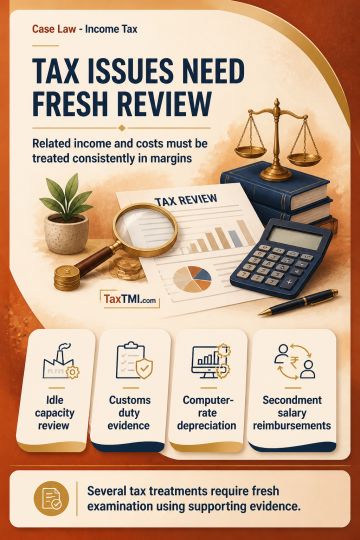
Transfer pricing margin adjustments require matching treatment of non-operating income and related costs, with comparability issues reconsidered on ev...
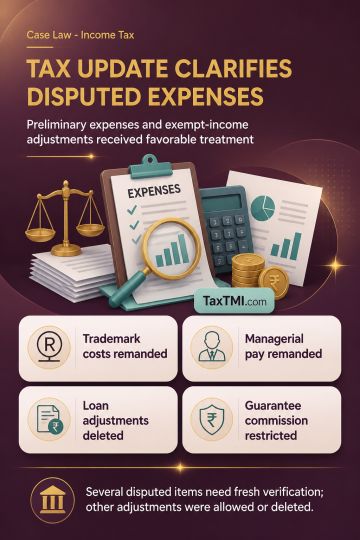
Preliminary-expense amortisation and MAT exempt-income adjustments prevailed, while trademark costs and managerial remuneration require fresh verifica...
Where liability to incur construction expenditure had already accrued under the business transaction, the Court applied the mercantile system and the Calcutta Company principle to allow deduction of the estimated expense on accrual basis; the concurrent finding permitting the construction deduction was upheld. In the sale-and-lease-back arrangement involving cinematographic rights, title had passed to the assessee and the vendor thereafter remained only as lessee; mere tax-saving motive, unsupported by material, did not make the transaction a colourable device. Depreciation on the films was therefore allowed, and the Revenue failed on both issues.
Where liability to incur construction expenditure had already accrued under the business transaction, the Court applied the mercantile system and the Calcutta Company principle to allow deduction of the estimated expense on accrual basis; the concurrent finding permitting the construction deduction was upheld. In the sale-and-lease-back arrangement involving cinematographic rights, title had passed to the assessee and the vendor thereafter remained only as lessee; mere tax-saving motive, unsupported by material, did not make the transaction a colourable device. Depreciation on the films was therefore allowed, and the Revenue failed on both issues.
Note: It is a system-generated summary and is for quick reference only.
 TaxTMI
  TaxTMI
 of 4826










 Join Channel