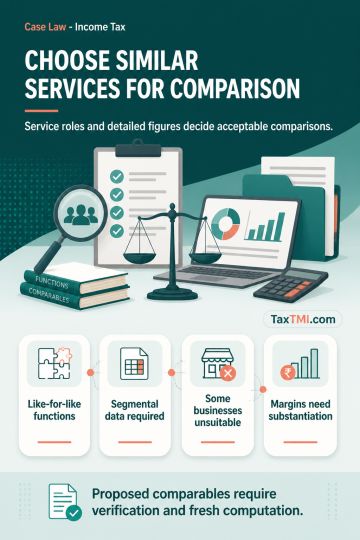
Functional comparability governs selection of support-service and IT-enabled service comparables, with verification required for unresolved data and m...
Bank account freezing requires statutory authority; anti-money-laundering compliance and KYC monitoring do not permit unilateral indefinite restrictio...
Where liability to incur construction expenditure had already accrued under the business transaction, the Court applied the mercantile system and the Calcutta Company principle to allow deduction of the estimated expense on accrual basis; the concurrent finding permitting the construction deduction was upheld. In the sale-and-lease-back arrangement involving cinematographic rights, title had passed to the assessee and the vendor thereafter remained only as lessee; mere tax-saving motive, unsupported by material, did not make the transaction a colourable device. Depreciation on the films was therefore allowed, and the Revenue failed on both issues.
Where liability to incur construction expenditure had already accrued under the business transaction, the Court applied the mercantile system and the Calcutta Company principle to allow deduction of the estimated expense on accrual basis; the concurrent finding permitting the construction deduction was upheld. In the sale-and-lease-back arrangement involving cinematographic rights, title had passed to the assessee and the vendor thereafter remained only as lessee; mere tax-saving motive, unsupported by material, did not make the transaction a colourable device. Depreciation on the films was therefore allowed, and the Revenue failed on both issues.
Note: It is a system-generated summary and is for quick reference only.
 TaxTMI
  TaxTMI
 of 4828














 Join Channel