Transfer pricing and tax deductions upheld on established principles, while employee contributions and warranty provisions returned for fresh examinat...
Captive transfer pricing relies on industrial consumer tariffs, while genuine quotations can benchmark effluent treatment transfers under the Other Me...
Specific tariff classification for ophthalmic instruments and extended limitation principles determine the treatment of duty demands, confiscation, an...
Integrated golf function determines classification, placing launch monitors and simulators under other golf equipment rather than measuring instrument...
Public servant status under anti-corruption law extends to recognised stock exchange leadership; constitutional and sanction challenges do not succeed...
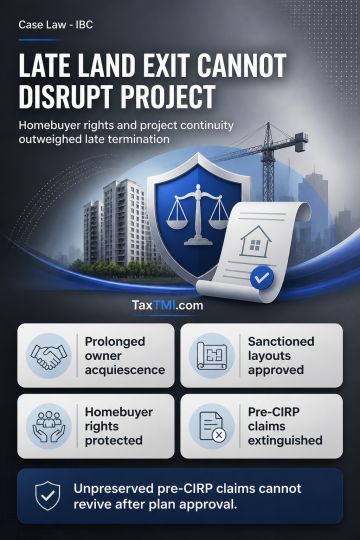
Acquiescence, homebuyer protection and clean-slate resolution principles prevent landowners from disrupting an integrated project through late termina...
Page of 4817
Press 'Enter' after typing page number.
1501 to 1520 of 96333 Results
❮
❯
❯❯
0 / 200
Expand Note
Add to Folder
No Folders have been created
+
Are you sure you want to delete "My most important" ?
Transfer pricing controversy turned on the correct characterization of transactions between an LLP and its associated enterprise, the proper appreciation of their FAR profiles, and the resulting arm's length pricing analysis. The Tribunal noted that the revenue authorities had relied on assumptions about the entities' activities and risk allocation, while the assessee's claim of cost-to-cost reimbursement had not been tested against complete contemporaneous material, including financials, employee profile, contractual terms and risk assumption. It held that the basis for applying the Profit Split Method was insufficiently reasoned and required fresh examination. The assessment and DRP-backed adjustment were set aside and the matter was restored to the AO/TPO for de novo adjudication and a speaking order.
Transfer pricing controversy turned on the correct characterization of transactions between an LLP and its associated enterprise, the proper appreciation of their FAR profiles, and the resulting arm's length pricing analysis. The Tribunal noted that the revenue authorities had relied on assumptions about the entities' activities and risk allocation, while the assessee's claim of cost-to-cost reimbursement had not been tested against complete contemporaneous material, including financials, employee profile, contractual terms and risk assumption. It held that the basis for applying the Profit Split Method was insufficiently reasoned and required fresh examination. The assessment and DRP-backed adjustment were set aside and the matter was restored to the AO/TPO for de novo adjudication and a speaking order.
Note: It is a system-generated summary and is for quick reference only.
 TaxTMI
  TaxTMI
 of 4817




















 Join Channel