Specified regulatory authority income receives conditional tax exemption, subject to non-commercial activity, unchanged income character, and return f...
Tax exemption for regulatory authority income applies retrospectively, subject to non-commercial activity, unchanged income sources, and return-filing...
Input tax credit conditions remain constitutionally valid, with eligible recipient claims considered under GST circulars and retrospective filing dead...
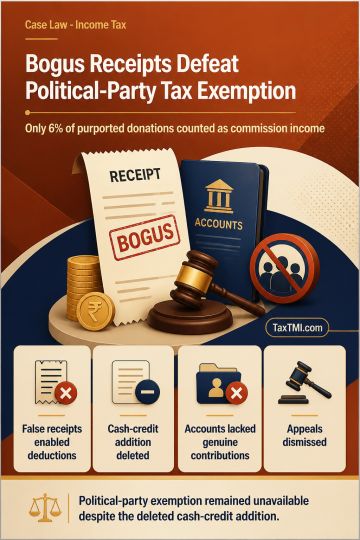
Bogus donation receipts justified commission income assessment and defeated political-party tax exemption for inaccurate accounts and reporting failur...
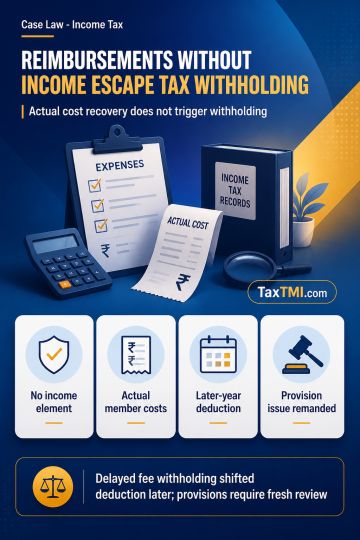
Pure reimbursement without income element escapes tax withholding, while delayed withholding and unsupported provisions face deferred or renewed scrut...
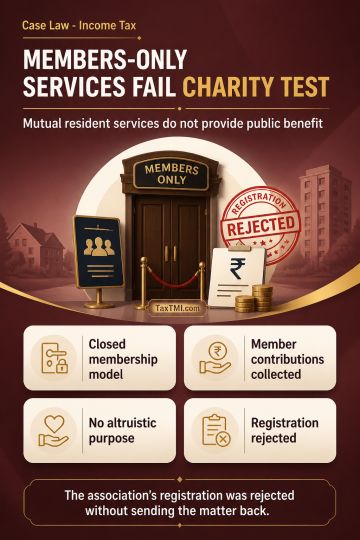
Public benefit requirement defeats charitable registration where residents' association services are reciprocal, member-only facilities governed by mu...
Transfer pricing controversy turned on the correct characterization of transactions between an LLP and its associated enterprise, the proper appreciation of their FAR profiles, and the resulting arm's length pricing analysis. The Tribunal noted that the revenue authorities had relied on assumptions about the entities' activities and risk allocation, while the assessee's claim of cost-to-cost reimbursement had not been tested against complete contemporaneous material, including financials, employee profile, contractual terms and risk assumption. It held that the basis for applying the Profit Split Method was insufficiently reasoned and required fresh examination. The assessment and DRP-backed adjustment were set aside and the matter was restored to the AO/TPO for de novo adjudication and a speaking order.
Transfer pricing controversy turned on the correct characterization of transactions between an LLP and its associated enterprise, the proper appreciation of their FAR profiles, and the resulting arm's length pricing analysis. The Tribunal noted that the revenue authorities had relied on assumptions about the entities' activities and risk allocation, while the assessee's claim of cost-to-cost reimbursement had not been tested against complete contemporaneous material, including financials, employee profile, contractual terms and risk assumption. It held that the basis for applying the Profit Split Method was insufficiently reasoned and required fresh examination. The assessment and DRP-backed adjustment were set aside and the matter was restored to the AO/TPO for de novo adjudication and a speaking order.
Note: It is a system-generated summary and is for quick reference only.
 TaxTMI
  TaxTMI
 of 4819













 Join Channel


