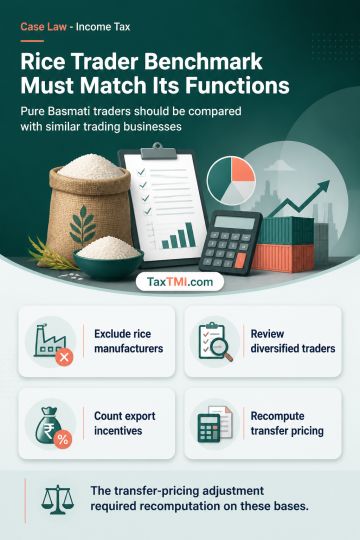
TNMM functional comparability requires excluding rice manufacturers from a pure Basmati rice trader's benchmark and recognising operating export recei...
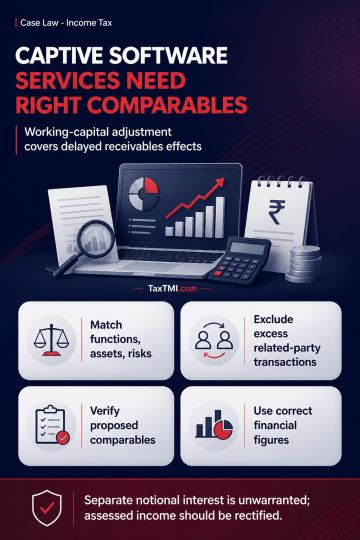
Working-capital adjustment subsumes delayed-receivable effects in TNMM benchmarking of captive software-development services, avoiding separate notion...
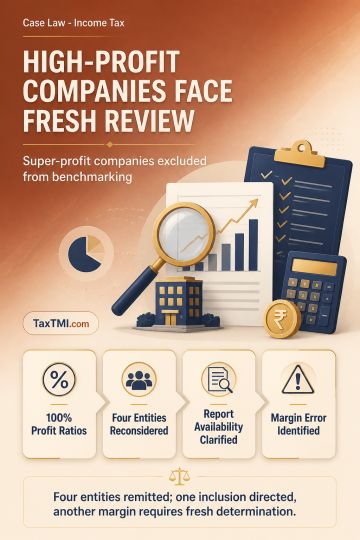
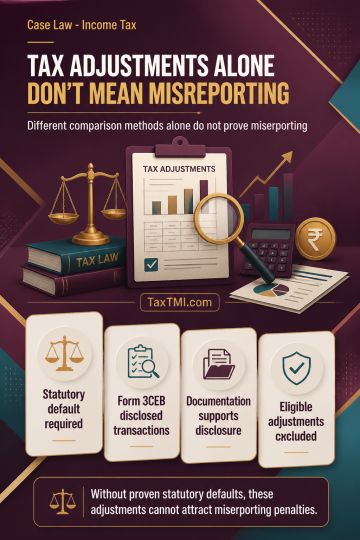
Transfer-pricing comparability requires exclusion of financially illogical super-profit comparables and correction of unsupported annual-report and ma...
Charitable character assessment preserves Section 80G approval despite inclusive spiritual teachings and incidental religious expenditure within the s...
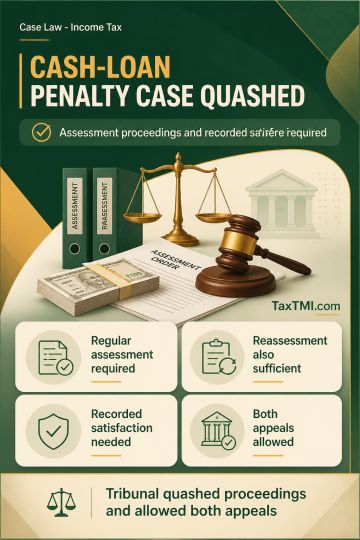
Penalty proceedings for cash-loan acceptance require assessment proceedings and recorded Assessing Officer satisfaction; absent these, the proceedings...
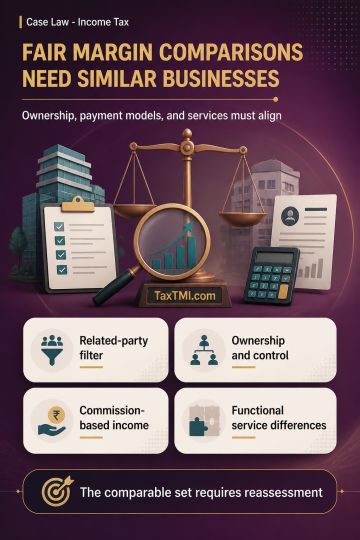
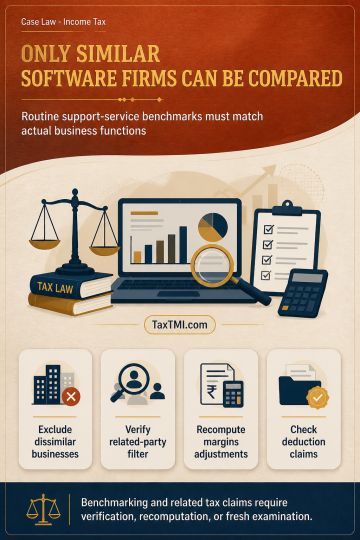
Functional comparability governs software-service benchmarking: dissimilar companies are excluded, while related-party filters, margins and working-ca...
Transfer pricing controversy turned on the correct characterization of transactions between an LLP and its associated enterprise, the proper appreciation of their FAR profiles, and the resulting arm's length pricing analysis. The Tribunal noted that the revenue authorities had relied on assumptions about the entities' activities and risk allocation, while the assessee's claim of cost-to-cost reimbursement had not been tested against complete contemporaneous material, including financials, employee profile, contractual terms and risk assumption. It held that the basis for applying the Profit Split Method was insufficiently reasoned and required fresh examination. The assessment and DRP-backed adjustment were set aside and the matter was restored to the AO/TPO for de novo adjudication and a speaking order.
Transfer pricing controversy turned on the correct characterization of transactions between an LLP and its associated enterprise, the proper appreciation of their FAR profiles, and the resulting arm's length pricing analysis. The Tribunal noted that the revenue authorities had relied on assumptions about the entities' activities and risk allocation, while the assessee's claim of cost-to-cost reimbursement had not been tested against complete contemporaneous material, including financials, employee profile, contractual terms and risk assumption. It held that the basis for applying the Profit Split Method was insufficiently reasoned and required fresh examination. The assessment and DRP-backed adjustment were set aside and the matter was restored to the AO/TPO for de novo adjudication and a speaking order.
Note: It is a system-generated summary and is for quick reference only.
 TaxTMI
  TaxTMI
 of 4830






 Join Channel


