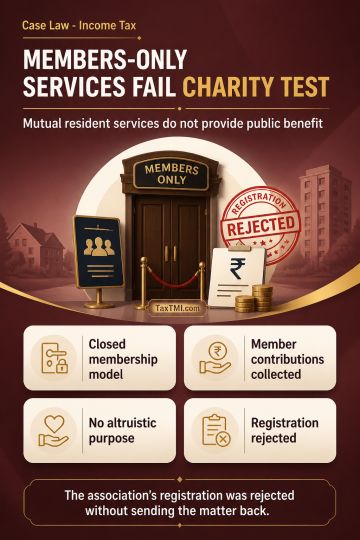
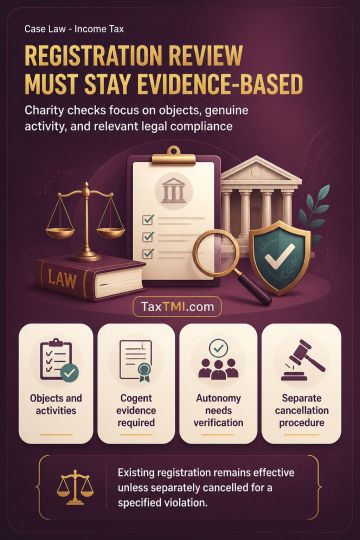
Public benefit requirement defeats charitable registration where residents' association services are reciprocal, member-only facilities governed by mu...
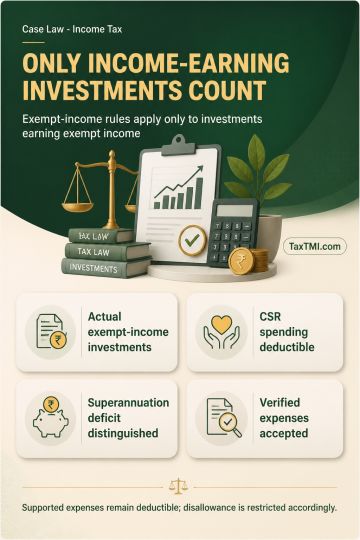
Exempt-income expenditure disallowance is confined to investments that actually generated exempt income, while supported business expenses remain dedu...
Objective characteristics and principal use govern mining-tyre classification, while fresh advance ruling applications may rely on additional technica...
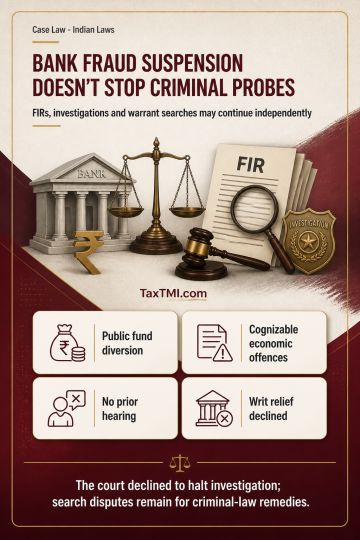
Administrative fraud classification suspension does not halt independent criminal investigation or warrant-based searches into alleged economic offenc...
A Section 9 insolvency petition was held not maintainable because the debt attributable to the corporate debtor alone did not meet the statutory minimum threshold under Section 4. The tribunal found that most invoices related to a sole proprietorship concern, while only a small portion stood in the name of the company. It held that the company and the proprietorship were separate legal entities, so liabilities of the proprietorship could not be aggregated with those of the corporate debtor merely because both were managed by the same person. The dismissal of the petition was therefore upheld.
A Section 9 insolvency petition was held not maintainable because the debt attributable to the corporate debtor alone did not meet the statutory minimum threshold under Section 4. The tribunal found that most invoices related to a sole proprietorship concern, while only a small portion stood in the name of the company. It held that the company and the proprietorship were separate legal entities, so liabilities of the proprietorship could not be aggregated with those of the corporate debtor merely because both were managed by the same person. The dismissal of the petition was therefore upheld.
Note: It is a system-generated summary and is for quick reference only.
 TaxTMI
  TaxTMI
 of 4819




 Join Channel


