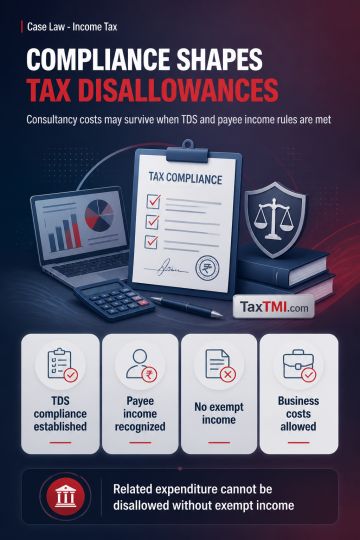
Tax deduction compliance and payee income recognition govern consultancy disallowance, while no exempt income prevents related expenditure disallowanc...
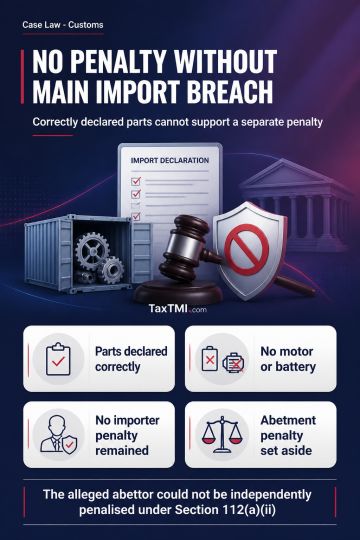
Derivative abetment liability fails when correctly declared imported components establish no underlying improper importation by the principal importer...
Tax exemption for regulatory authority income applies retrospectively, subject to non-commercial activity, unchanged income sources, and return filing...
A Section 9 insolvency petition was held not maintainable because the debt attributable to the corporate debtor alone did not meet the statutory minimum threshold under Section 4. The tribunal found that most invoices related to a sole proprietorship concern, while only a small portion stood in the name of the company. It held that the company and the proprietorship were separate legal entities, so liabilities of the proprietorship could not be aggregated with those of the corporate debtor merely because both were managed by the same person. The dismissal of the petition was therefore upheld.
A Section 9 insolvency petition was held not maintainable because the debt attributable to the corporate debtor alone did not meet the statutory minimum threshold under Section 4. The tribunal found that most invoices related to a sole proprietorship concern, while only a small portion stood in the name of the company. It held that the company and the proprietorship were separate legal entities, so liabilities of the proprietorship could not be aggregated with those of the corporate debtor merely because both were managed by the same person. The dismissal of the petition was therefore upheld.
Note: It is a system-generated summary and is for quick reference only.
 TaxTMI
  TaxTMI
 of 4821






 Join Channel


