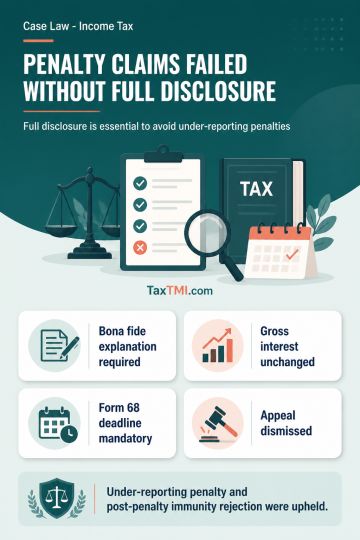
Bona fide disclosure requirements govern under-reporting penalties, and post-penalty immunity applications cannot secure available statutory protectio...
Certificate-of-origin verification procedure governs preferential customs benefits; denial without retroactive verification was set aside with consequ...
Disciplinary Committee jurisdiction and mandatory investigation requirements invalidated cancellation of an insolvency professional's registration and...
Retention of seized property survives where recorded reasons support proceeds of crime, while stayed investigation periods are excluded from limitatio...
Once a return is filed in response to a notice under section 148, issuance of notice under section 143(2) is a mandatory statutory requirement; non-issuance is not a curable defect. The Tribunal held that the return could not be treated as non est merely because it was filed beyond the period mentioned in the reassessment notice, and read the amended provision harmoniously with the CBDT e-verification clarifications. Since no section 143(2) notice was issued after the return was filed, the reassessment was held bad in law, void ab initio, and quashed; the remaining grounds were left open.
Once a return is filed in response to a notice under section 148, issuance of notice under section 143(2) is a mandatory statutory requirement; non-issuance is not a curable defect. The Tribunal held that the return could not be treated as non est merely because it was filed beyond the period mentioned in the reassessment notice, and read the amended provision harmoniously with the CBDT e-verification clarifications. Since no section 143(2) notice was issued after the return was filed, the reassessment was held bad in law, void ab initio, and quashed; the remaining grounds were left open.
Note: It is a system-generated summary and is for quick reference only.
 TaxTMI
  TaxTMI
 of 4817


















 Join Channel


