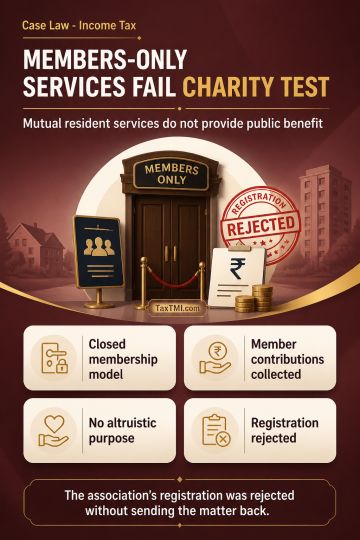
Public benefit requirement defeats charitable registration where residents' association services are reciprocal, member-only facilities governed by mu...
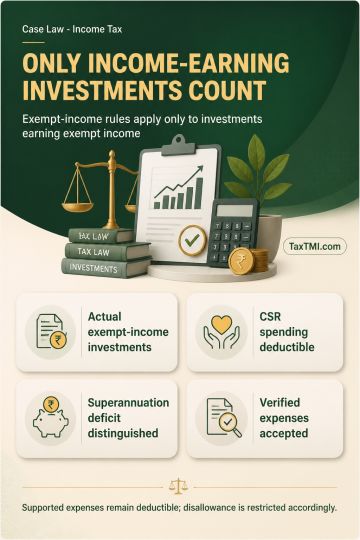
Exempt-income expenditure disallowance is confined to investments that actually generated exempt income, while supported business expenses remain dedu...
Objective characteristics and principal use govern mining-tyre classification, while fresh advance ruling applications may rely on additional technica...
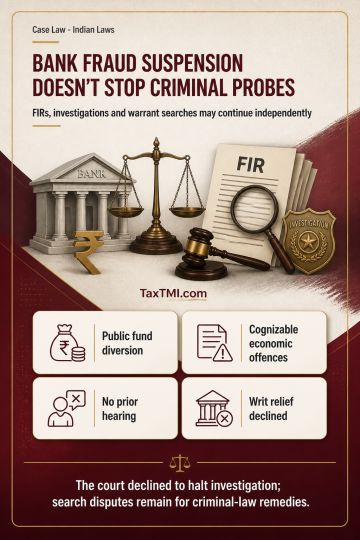
Administrative fraud classification suspension does not halt independent criminal investigation or warrant-based searches into alleged economic offenc...
Once a return is filed in response to a notice under section 148, issuance of notice under section 143(2) is a mandatory statutory requirement; non-issuance is not a curable defect. The Tribunal held that the return could not be treated as non est merely because it was filed beyond the period mentioned in the reassessment notice, and read the amended provision harmoniously with the CBDT e-verification clarifications. Since no section 143(2) notice was issued after the return was filed, the reassessment was held bad in law, void ab initio, and quashed; the remaining grounds were left open.
Once a return is filed in response to a notice under section 148, issuance of notice under section 143(2) is a mandatory statutory requirement; non-issuance is not a curable defect. The Tribunal held that the return could not be treated as non est merely because it was filed beyond the period mentioned in the reassessment notice, and read the amended provision harmoniously with the CBDT e-verification clarifications. Since no section 143(2) notice was issued after the return was filed, the reassessment was held bad in law, void ab initio, and quashed; the remaining grounds were left open.
Note: It is a system-generated summary and is for quick reference only.
 TaxTMI
  TaxTMI
 of 4819













 Join Channel


