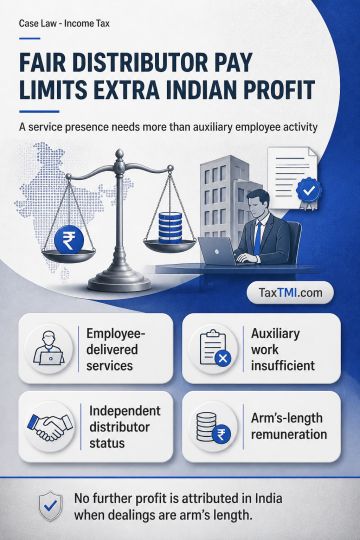
Service permanent establishment requires non-auxiliary services, while arm's-length distributor remuneration precludes further profit attribution in I...
Make-available condition excludes standard SaaS subscription receipts where customers receive no independently usable technical knowledge after subscr...
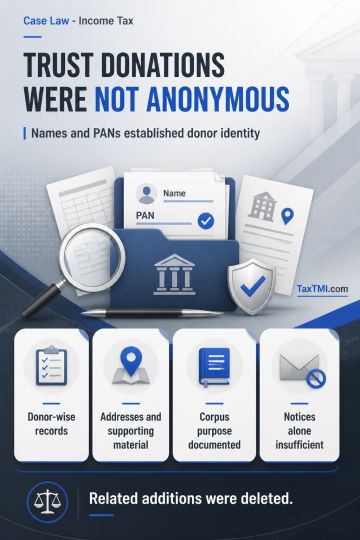
Anonymous donation classification fails where charitable trusts maintain undisputed donor identity records and evidence corpus contributions' intended...
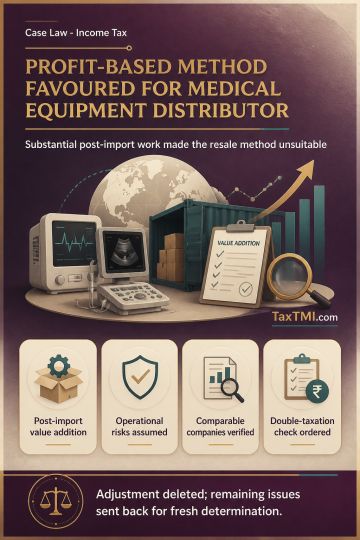
Transfer pricing method selection favours TNMM where medical-equipment distribution involves substantial post-import value addition and operational ri...
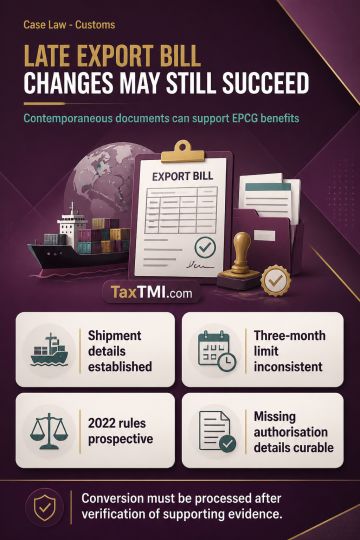
Post-export shipping bill conversion remains available where contemporaneous evidence supports EPCG benefits despite curable procedural omissions and ...
Once a return is filed in response to a notice under section 148, issuance of notice under section 143(2) is a mandatory statutory requirement; non-issuance is not a curable defect. The Tribunal held that the return could not be treated as non est merely because it was filed beyond the period mentioned in the reassessment notice, and read the amended provision harmoniously with the CBDT e-verification clarifications. Since no section 143(2) notice was issued after the return was filed, the reassessment was held bad in law, void ab initio, and quashed; the remaining grounds were left open.
Once a return is filed in response to a notice under section 148, issuance of notice under section 143(2) is a mandatory statutory requirement; non-issuance is not a curable defect. The Tribunal held that the return could not be treated as non est merely because it was filed beyond the period mentioned in the reassessment notice, and read the amended provision harmoniously with the CBDT e-verification clarifications. Since no section 143(2) notice was issued after the return was filed, the reassessment was held bad in law, void ab initio, and quashed; the remaining grounds were left open.
Note: It is a system-generated summary and is for quick reference only.
 TaxTMI
  TaxTMI
 of 4826














 Join Channel


