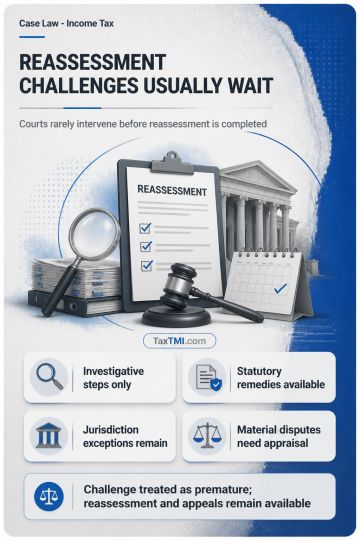
Preliminary reassessment proceedings generally require statutory remedies unless jurisdiction is wholly absent or mandatory conditions are patently br...
Agricultural land classification requires cumulative factual indicators, while industrial-purpose land and absent agricultural use defeat reinvestment...
Composite residential flat exemption upheld where supplementary agreement merged adjoining units and additional evidence supported the taxpayer's inve...
Once a return is filed in response to a notice under section 148, issuance of notice under section 143(2) is a mandatory statutory requirement; non-issuance is not a curable defect. The Tribunal held that the return could not be treated as non est merely because it was filed beyond the period mentioned in the reassessment notice, and read the amended provision harmoniously with the CBDT e-verification clarifications. Since no section 143(2) notice was issued after the return was filed, the reassessment was held bad in law, void ab initio, and quashed; the remaining grounds were left open.
Once a return is filed in response to a notice under section 148, issuance of notice under section 143(2) is a mandatory statutory requirement; non-issuance is not a curable defect. The Tribunal held that the return could not be treated as non est merely because it was filed beyond the period mentioned in the reassessment notice, and read the amended provision harmoniously with the CBDT e-verification clarifications. Since no section 143(2) notice was issued after the return was filed, the reassessment was held bad in law, void ab initio, and quashed; the remaining grounds were left open.
Note: It is a system-generated summary and is for quick reference only.
 TaxTMI
  TaxTMI
 of 4830



















 Join Channel


