Transfer pricing requires evidence for AMP transactions, functionally reliable comparables, and appropriate aggregation or Berry Ratio benchmarking me...
Revisionary jurisdiction cannot reopen share capital assessments where adequate inquiry supports a permissible view and no independent error is establ...
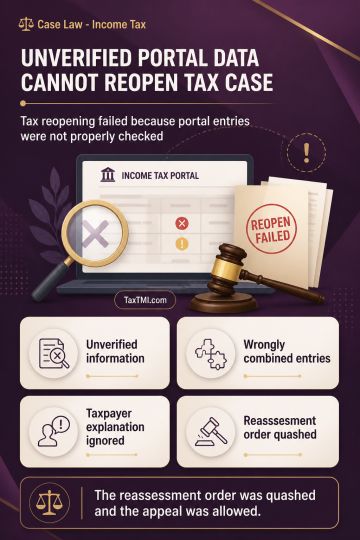
Reassessment jurisdiction fails where unverified portal information is aggregated without examining the taxpayer's explanation or relevance of entries...
Statutory sanction for delayed reassessment requires approval from the prescribed authority; approval by an inferior authority invalidates jurisdictio...
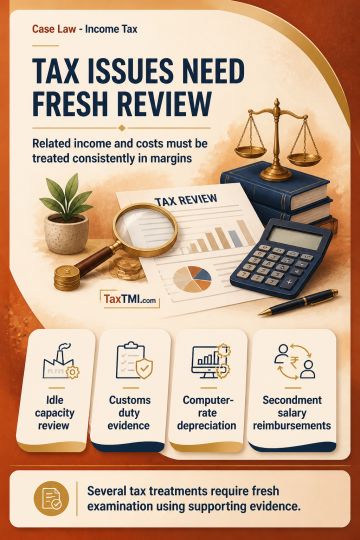
Transfer pricing margin adjustments require matching treatment of non-operating income and related costs, with comparability issues reconsidered on ev...
Preliminary-expense amortisation and MAT exempt-income adjustments prevailed, while trademark costs and managerial remuneration require fresh verifica...
Export valuation requires contemporaneous evidence; unrelated invoices cannot prove overvaluation, and dual penalties on firm and partner are impermis...
Treaty residency under the India-US DTAA turned on the tie-break test, especially the assessee's centre of vital interests. The Tribunal noted that personal ties could point to the US because the immediate family resided there, but economic ties appeared substantially rooted in India. Because critical facts on family residence, US-return income breakup, and prior-year treatment were not adequately established, the matter could not be decided on the existing record. Applying the approach in Ashok Kumar Pandey, the Tribunal required examination of the nucleus family and active commercial involvement, and remanded the case for fresh factual verification and adjudication after giving the assessee an opportunity to be heard.
Treaty residency under the India-US DTAA turned on the tie-break test, especially the assessee's centre of vital interests. The Tribunal noted that personal ties could point to the US because the immediate family resided there, but economic ties appeared substantially rooted in India. Because critical facts on family residence, US-return income breakup, and prior-year treatment were not adequately established, the matter could not be decided on the existing record. Applying the approach in Ashok Kumar Pandey, the Tribunal required examination of the nucleus family and active commercial involvement, and remanded the case for fresh factual verification and adjudication after giving the assessee an opportunity to be heard.
Note: It is a system-generated summary and is for quick reference only.
 TaxTMI
  TaxTMI
 of 4827


















 Join Channel


