Educational approval requires mandatory State registration, but incidental surplus and trustee-owned land do not prove private benefit or profit motiv...
Judicial review of settlement orders cannot reopen settled customs notices, while statutory interest remains subject to verification and quantificatio...
Customs Broker licence lending for consideration justified revocation where exporter authorisation and client verification obligations were also breac...
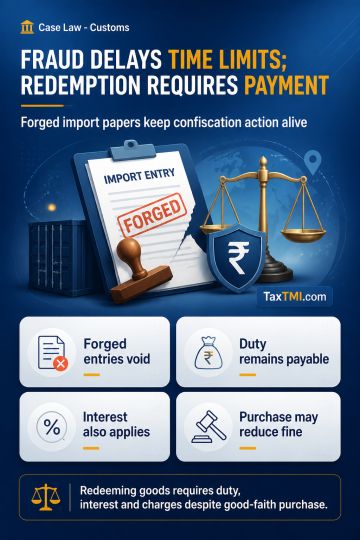
Fraudulent import documents suspend limitation protection, while redemption of confiscated goods requires duty and interest despite bona fide purchase...
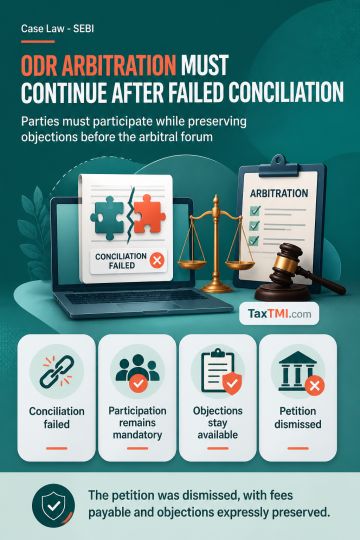
ODR arbitration participation remains mandatory after failed conciliation, while jurisdictional and maintainability objections stay available before t...
Transparency in technical bid evaluation requires disclosed standards and recorded reasons; opaque scoring invalidated tender awards and required fres...
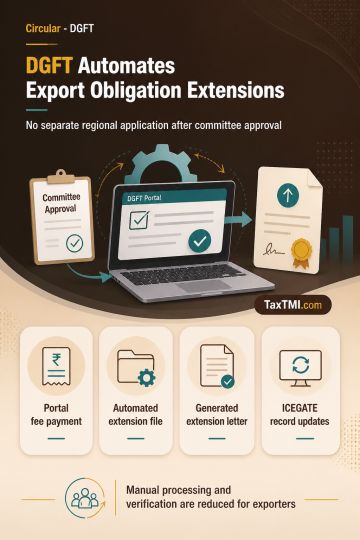
Automated export obligation extensions remove separate regional applications after committee approval for Advance Authorisation and EPCG authorisation...
Page of 4827
Press 'Enter' after typing page number.
421 to 440 of 96536 Results
❮
❯
❯❯
0 / 200
Expand Note
Add to Folder
No Folders have been created
+
Are you sure you want to delete "My most important" ?
The exemption under Notification No. 21/2002 could not be denied merely because the importer did not re-export the goods within the date mentioned in the DGH certificate, as the notification itself imposed no such time-bound condition. The Tribunal held that Condition No. 29 only required a DGH certificate confirming that the goods were needed for petroleum operations and imported under the relevant licence or mining lease; any additional re-export stipulation in the certificate could not override the notification. It further applied its earlier ruling that clearance to an SEZ unit after use amounts to export under the SEZ Act. The demand of duty, interest and penalty was therefore unsustainable and was set aside.
The exemption under Notification No. 21/2002 could not be denied merely because the importer did not re-export the goods within the date mentioned in the DGH certificate, as the notification itself imposed no such time-bound condition. The Tribunal held that Condition No. 29 only required a DGH certificate confirming that the goods were needed for petroleum operations and imported under the relevant licence or mining lease; any additional re-export stipulation in the certificate could not override the notification. It further applied its earlier ruling that clearance to an SEZ unit after use amounts to export under the SEZ Act. The demand of duty, interest and penalty was therefore unsustainable and was set aside.
Note: It is a system-generated summary and is for quick reference only.
 TaxTMI
  TaxTMI
 of 4827

















 Join Channel