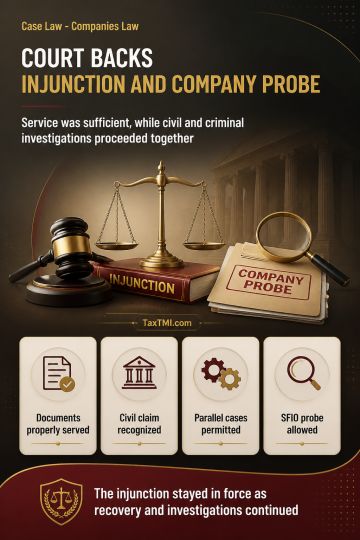
Ex parte injunction service requirements were substantially met, while civil recovery and SFIO investigation into provident fund defalcation continued...
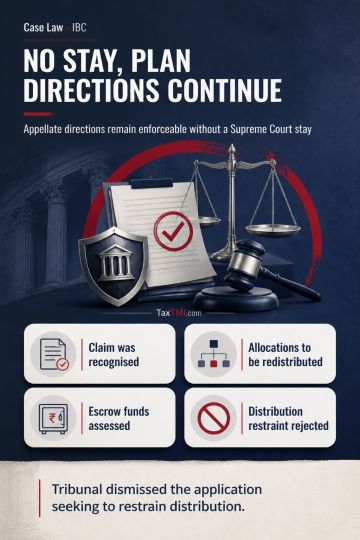
Enforcement of resolution-plan directions continues without a Supreme Court stay, preventing suspension of redistribution and escrowed-fund distributi...
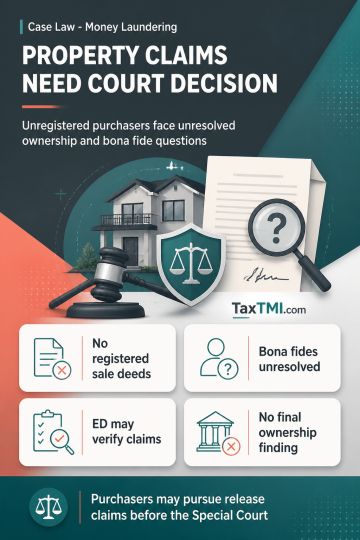
Third-party ownership claims over attached property require Special Court adjudication where purchasers lack registered sale deeds and bona fides rema...
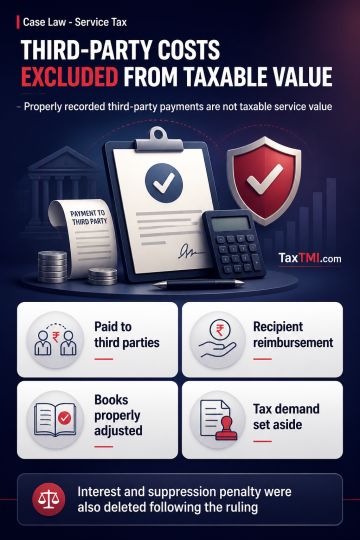
Pure-agent reimbursements in clearing and forwarding services are excluded from taxable value when qualifying third-party payments are properly record...
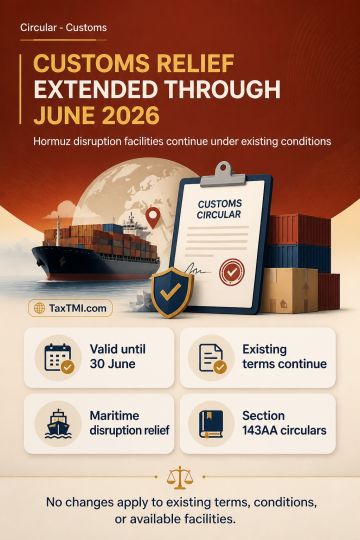
Customs relief for Strait of Hormuz maritime disruptions remains available, with existing conditions continuing unchanged through the extended validit...
A VAT attachment could not survive a liquidation sale where the Department's claim was filed belatedly, rejected, and never admitted in insolvency. The Court distinguished Rainbow Papers, noting that it concerned the unamended regulation and corporate resolution, whereas the present case arose in liquidation under the amended claim process. It held that the Insolvency and Bankruptcy Code's waterfall mechanism and overriding effect prevent a pre-existing attachment from defeating the auction purchaser's title or being revived through writ proceedings. The Court also held that a statutory charge under the TNVAT Act does not, by itself, make the Department a secured creditor under the Code, and directed a contra entry in the encumbrance records.
A VAT attachment could not survive a liquidation sale where the Department's claim was filed belatedly, rejected, and never admitted in insolvency. The Court distinguished Rainbow Papers, noting that it concerned the unamended regulation and corporate resolution, whereas the present case arose in liquidation under the amended claim process. It held that the Insolvency and Bankruptcy Code's waterfall mechanism and overriding effect prevent a pre-existing attachment from defeating the auction purchaser's title or being revived through writ proceedings. The Court also held that a statutory charge under the TNVAT Act does not, by itself, make the Department a secured creditor under the Code, and directed a contra entry in the encumbrance records.
Note: It is a system-generated summary and is for quick reference only.
 TaxTMI
  TaxTMI
 of 4819




 Join Channel


