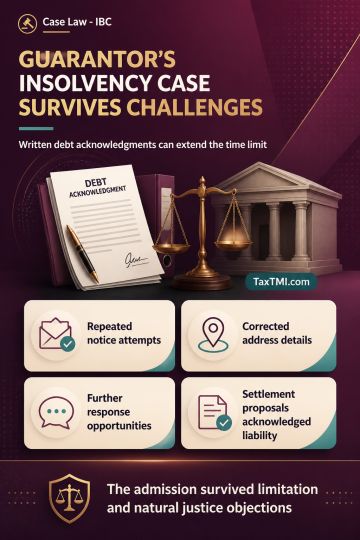
Service of notice and contractual debt acknowledgment preserved insolvency admission against a corporate guarantor despite limitation and natural just...
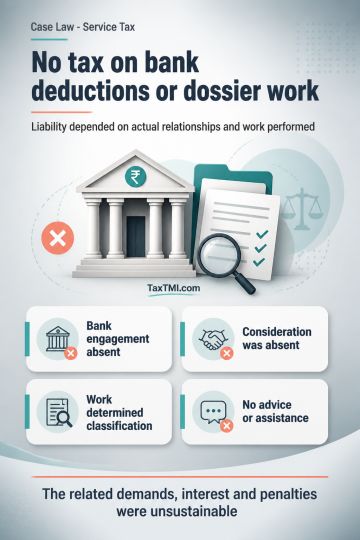
Original works exemption excludes standalone boulder transportation, leaving subcontracted railway-project transport services subject to service tax l...
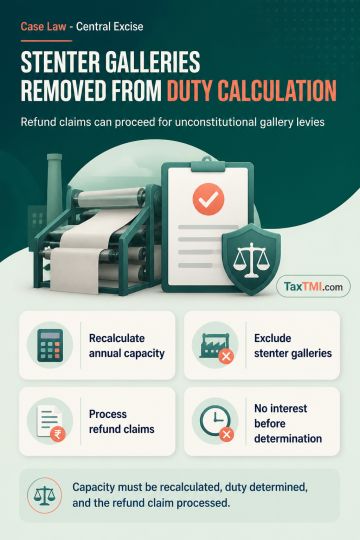
Annual production capacity determinations excluding stenter galleries support refunds for unconstitutional excise levies without an unjust-enrichment ...
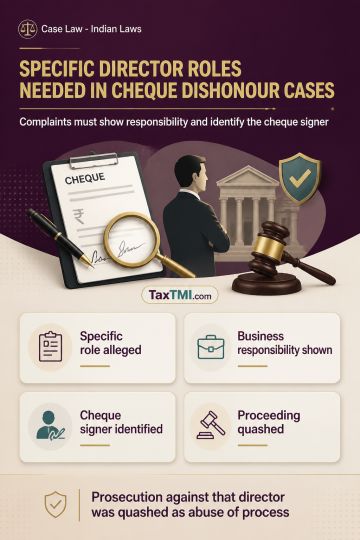
Vicarious liability for cheque dishonour requires specific allegations of responsibility and cheque signatory; generic director allegations cannot sus...
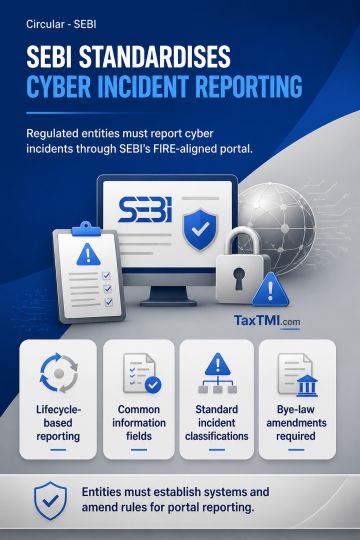
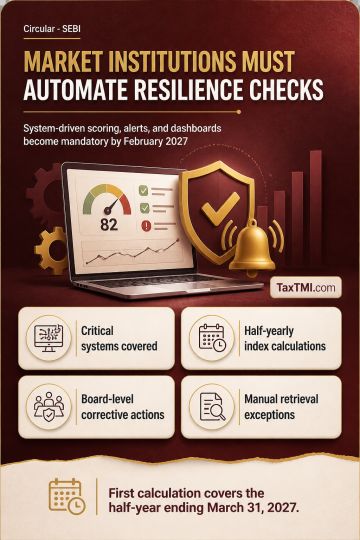
IT Resilience Index requires market infrastructure institutions to automate resilience scoring, early warnings, and continuous service-delivery monito...
Writ jurisdiction may be exercised against show cause notices...
Writ relief against show cause notices is available where jurisdiction is absent and concluded advance rulings cannot be reopened without fresh fraud evidence.
Contents
Summary
Note
Bookmark
Share
✓ Copied successfully !
Print
Print Options
For full text, please login
Login to TaxTMI
Verification Pending
The Email Id has not been verified. Click on the link we have sent on
Writ jurisdiction may be exercised against show cause notices where the notice is alleged to be without jurisdiction, pre-determined, or abusive, even if alternative statutory remedies exist. The Court treated the challenge as one to the very assumption of power and rejected objections of prematurity and disputed facts. It further held that advance rulings are binding on the applicant and jurisdictional officer unless law or facts change, and that reopening the same issues requires fresh material showing fraud, wilful misstatement, or suppression. As no such material existed and the earlier adjudication had attained finality, the notices under the GST and excise laws were held to be without jurisdiction and quashed.
Writ jurisdiction may be exercised against show cause notices where the notice is alleged to be without jurisdiction, pre-determined, or abusive, even if alternative statutory remedies exist. The Court treated the challenge as one to the very assumption of power and rejected objections of prematurity and disputed facts. It further held that advance rulings are binding on the applicant and jurisdictional officer unless law or facts change, and that reopening the same issues requires fresh material showing fraud, wilful misstatement, or suppression. As no such material existed and the earlier adjudication had attained finality, the notices under the GST and excise laws were held to be without jurisdiction and quashed.
Note: It is a system-generated summary and is for quick reference only.
 TaxTMI
  TaxTMI
 of 4828










 Join Channel