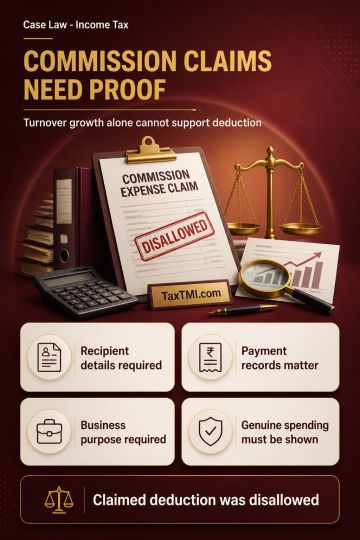
Business expenditure deduction requires proof of genuine commission payments and commercial allowability; turnover growth alone cannot validate the cl...
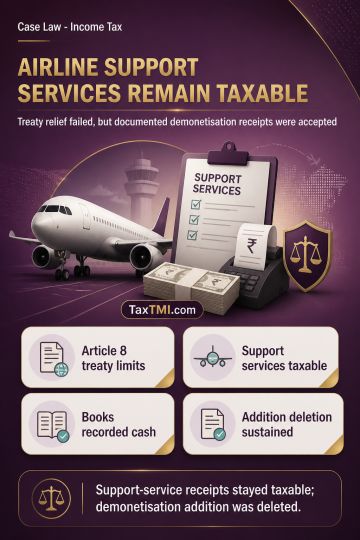
Article 8 treaty coverage excluded third-party airline support services, while documented demonetisation cash receipts remained accepted business inco...
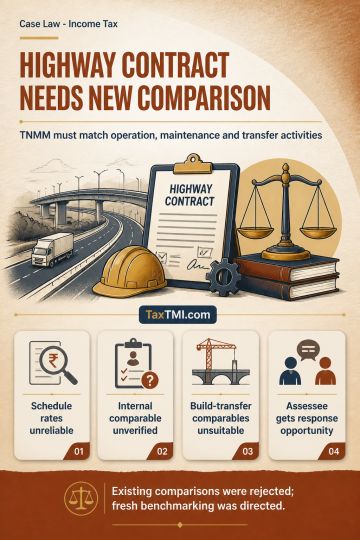
Functional comparability under TNMM requires highway contract benchmarks to reflect operation, maintenance and transfer activities, requiring fresh be...
Reopening after four years was invalid because the recorded reasons did not a failure by the assessee to fully and truly disclose material facts in the original scrutiny assessment. The AO had already sought details of unsecured loans and the assessee had furnished confirmations before assessment under Section 143(3) was completed without addition on that issue. The reasons for reopening merely referred to survey information about bogus unsecured loans from shell companies, but did not identify the loans, entities, or connecting material. Such vague reasons could not be supplemented later through objections, a rejection order, or a subsequent notice. The Section 148 notice was quashed.
Reopening after four years was invalid because the recorded reasons did not a failure by the assessee to fully and truly disclose material facts in the original scrutiny assessment. The AO had already sought details of unsecured loans and the assessee had furnished confirmations before assessment under Section 143(3) was completed without addition on that issue. The reasons for reopening merely referred to survey information about bogus unsecured loans from shell companies, but did not identify the loans, entities, or connecting material. Such vague reasons could not be supplemented later through objections, a rejection order, or a subsequent notice. The Section 148 notice was quashed.
Note: It is a system-generated summary and is for quick reference only.
 TaxTMI
  TaxTMI
 of 4817







 Join Channel


