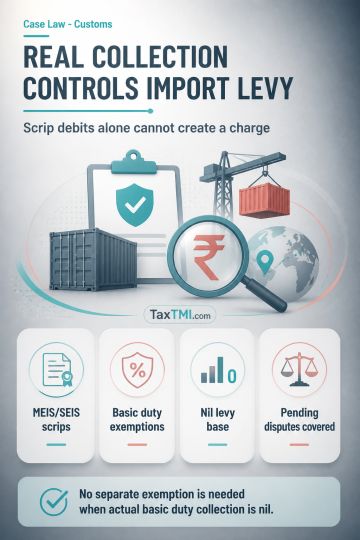
Country of Origin Certificates and declared transaction value supported preferential customs exemption where authenticity and invoice prices remained ...
Online bond platforms may offer overseas-regulated products and tax-specific bonds subject to disclosures, compliance safeguards and revised complianc...
Corporate guarantee valuation permits actual ascertainable commission while barring retroactive application and extended-period penalties for bona fid...
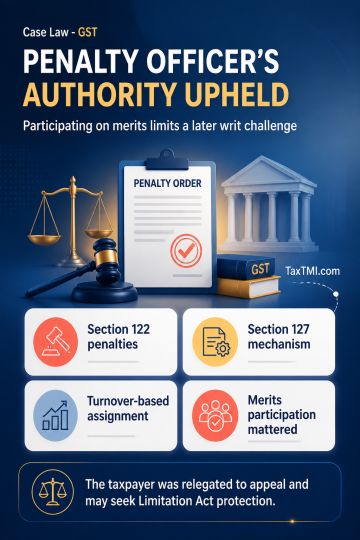
Proper-officer jurisdiction under UPGST penalty provisions upheld; participation on merits prevents bypassing the statutory appellate remedy through w...
Transitioned CENVAT credit may validly satisfy mandatory pre-deposit requirements for legacy service tax appeals through Electronic Credit Ledger debi...
Building-plan sanction charges require statutory authority; unauthorised fees and GST were quashed, while labour cess must follow prescribed collectio...
The ITAT addressed multiple revenue and business expense issues, holding that advances from customers already accounted for under sale agreements or the Percentage of Completion Method could not be added again, and that notional interest on business advances or imprest could not be taxed as hypothetical income. It sustained deletion of disallowances where invoices, payment evidence, or business nexus were verified, but upheld a disallowance for advertisement expense found unrelated to business. It also held that section 14A disallowance could not survive in the absence of exempt income, and accepted prior period expenses where liability had crystallized. Certain issues on revised computation, advertisement, consultancy and withholding tax were remanded for verification, while employee accommodation commission and brokerage and write-off of advances were allowed as deductible business loss.
The ITAT addressed multiple revenue and business expense issues, holding that advances from customers already accounted for under sale agreements or the Percentage of Completion Method could not be added again, and that notional interest on business advances or imprest could not be taxed as hypothetical income. It sustained deletion of disallowances where invoices, payment evidence, or business nexus were verified, but upheld a disallowance for advertisement expense found unrelated to business. It also held that section 14A disallowance could not survive in the absence of exempt income, and accepted prior period expenses where liability had crystallized. Certain issues on revised computation, advertisement, consultancy and withholding tax were remanded for verification, while employee accommodation commission and brokerage and write-off of advances were allowed as deductible business loss.
Note: It is a system-generated summary and is for quick reference only.
 TaxTMI
  TaxTMI
 of 4824
















 Join Channel