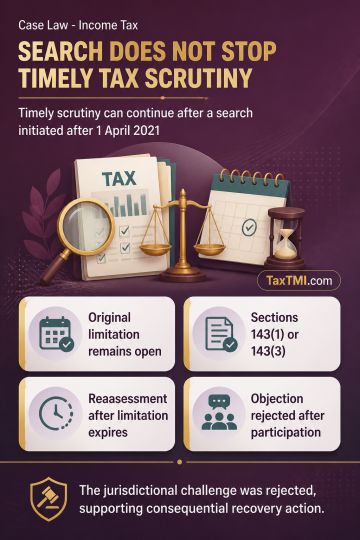
Post-search scrutiny assessment remains available where original assessment limitation is unexpired, permitting timely completion under regular assess...
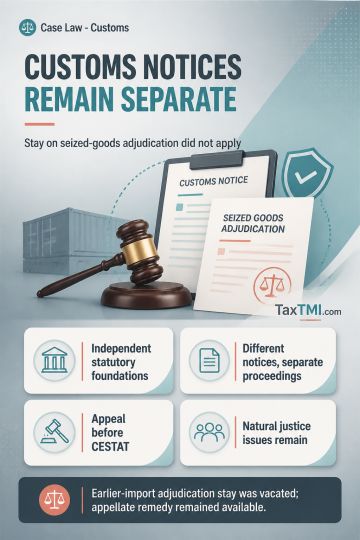
Independent show-cause notices remain separate proceedings, while customs adjudication challenges should ordinarily follow the statutory appellate rem...
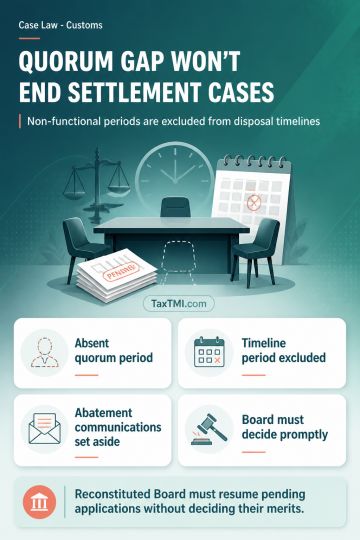
Institutional incapacity in customs settlement proceedings excludes non-functional quorum periods from statutory disposal timelines, preventing automa...
For IGST classification, the tariff heading used in the rate notification was treated as inseparably linked to the goods description, so the Department could not shift the goods to a residual entry without first challenging the importer's self-assessed classification under heading 8432. As the show cause notice did not seek reclassification or dispute that classification, a higher IGST demand under the residual serial could not be sustained and the appellate remand for fresh adjudication was unwarranted. The Tribunal also held that the extended limitation period was unavailable because the notice did not establish wilful misstatement, collusion or suppression of facts. The remand was set aside and the order dropping the demand was restored.
For IGST classification, the tariff heading used in the rate notification was treated as inseparably linked to the goods description, so the Department could not shift the goods to a residual entry without first challenging the importer's self-assessed classification under heading 8432. As the show cause notice did not seek reclassification or dispute that classification, a higher IGST demand under the residual serial could not be sustained and the appellate remand for fresh adjudication was unwarranted. The Tribunal also held that the extended limitation period was unavailable because the notice did not establish wilful misstatement, collusion or suppression of facts. The remand was set aside and the order dropping the demand was restored.
Note: It is a system-generated summary and is for quick reference only.
 TaxTMI
  TaxTMI
 of 4819



















 Join Channel


