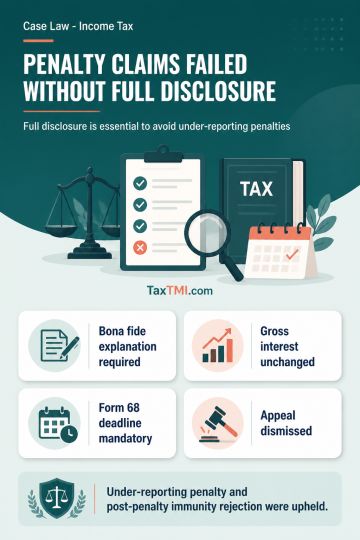
Bona fide disclosure requirements govern under-reporting penalties, and post-penalty immunity applications cannot secure available statutory protectio...
Certificate-of-origin verification procedure governs preferential customs benefits; denial without retroactive verification was set aside with consequ...
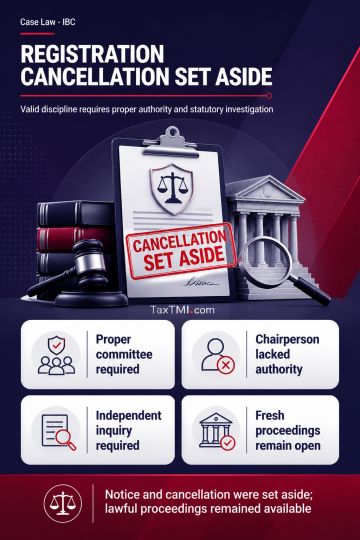
Disciplinary Committee jurisdiction and mandatory investigation requirements invalidated cancellation of an insolvency professional's registration and...
Retention of seized property survives where recorded reasons support proceeds of crime, while stayed investigation periods are excluded from limitatio...
Section 65 of the IBC permits termination of CIRP where initiation is shown to be fraudulent or malicious, but only on specific pleadings and supporting material. The NCLAT held that the provision can be invoked even after a Section 7 admission order attains finality, yet it cannot be used to reopen the earlier finding on debt and default. On the facts, the bank relied on the same assignment-based contention already considered in the Section 7 proceedings, and the record did not show collusion, fraud or malicious intent. The forensic audit direction was also set aside because no such relief had been sought and it was unnecessary once Section 65 relief was refused.
Section 65 of the IBC permits termination of CIRP where initiation is shown to be fraudulent or malicious, but only on specific pleadings and supporting material. The NCLAT held that the provision can be invoked even after a Section 7 admission order attains finality, yet it cannot be used to reopen the earlier finding on debt and default. On the facts, the bank relied on the same assignment-based contention already considered in the Section 7 proceedings, and the record did not show collusion, fraud or malicious intent. The forensic audit direction was also set aside because no such relief had been sought and it was unnecessary once Section 65 relief was refused.
Note: It is a system-generated summary and is for quick reference only.
 TaxTMI
  TaxTMI
 of 4817













 Join Channel


