Transfer pricing requires evidence for AMP transactions, functionally reliable comparables, and appropriate aggregation or Berry Ratio benchmarking me...
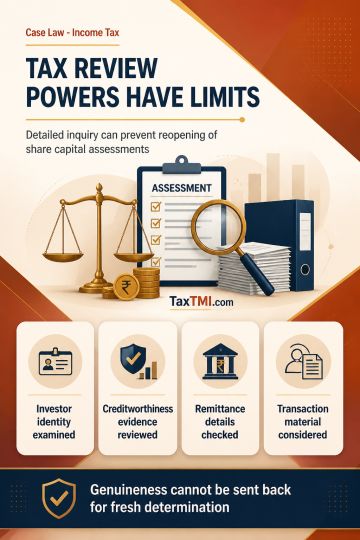
Revisionary jurisdiction cannot reopen share capital assessments where adequate inquiry supports a permissible view and no independent error is establ...
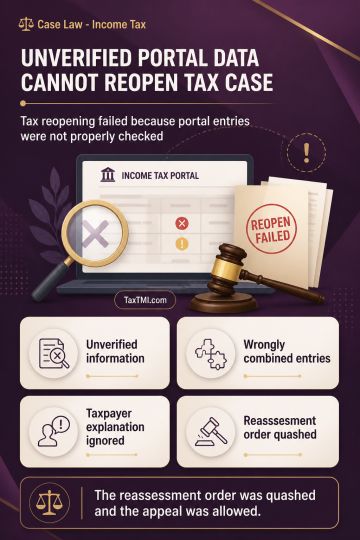
Reassessment jurisdiction fails where unverified portal information is aggregated without examining the taxpayer's explanation or relevance of entries...
Statutory sanction for delayed reassessment requires approval from the prescribed authority; approval by an inferior authority invalidates jurisdictio...
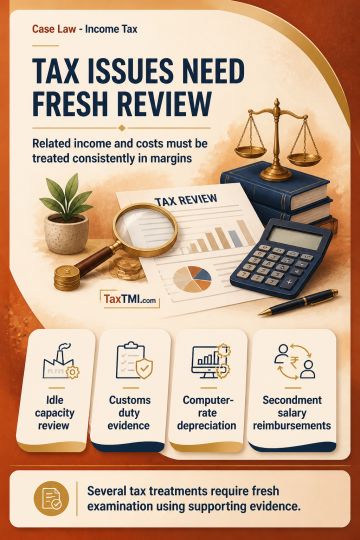
Transfer pricing margin adjustments require matching treatment of non-operating income and related costs, with comparability issues reconsidered on ev...
Preliminary-expense amortisation and MAT exempt-income adjustments prevailed, while trademark costs and managerial remuneration require fresh verifica...
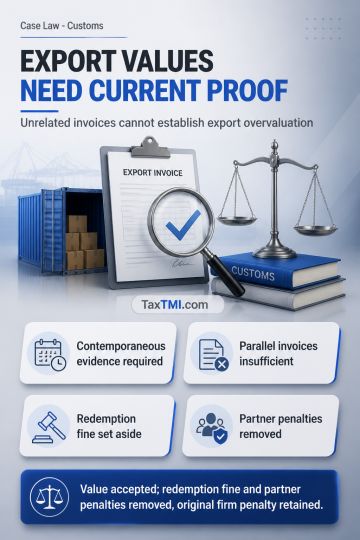
Export valuation requires contemporaneous evidence; unrelated invoices cannot prove overvaluation, and dual penalties on firm and partner are impermis...
A pure question of law bearing on taxability could be raised before the Tribunal even if not taken earlier, as Rule 10 of the CESTAT (Procedure) Rules, 1982 permits additional grounds subject to hearing the other side. The service tax demand for April 2009 to June 2010 failed because it related to the same residential project already dealt with in the appellant's own case, where the earlier order had been set aside; the present demand had no surviving foundation and was also set aside. For July 2010 to March 2011, the demand under construction of complex service was unsustainable because the activity was composite in nature, as reflected by the abatement granted in the notice, and post-01.07.2010 such activity fell outside that category.
A pure question of law bearing on taxability could be raised before the Tribunal even if not taken earlier, as Rule 10 of the CESTAT (Procedure) Rules, 1982 permits additional grounds subject to hearing the other side. The service tax demand for April 2009 to June 2010 failed because it related to the same residential project already dealt with in the appellant's own case, where the earlier order had been set aside; the present demand had no surviving foundation and was also set aside. For July 2010 to March 2011, the demand under construction of complex service was unsustainable because the activity was composite in nature, as reflected by the abatement granted in the notice, and post-01.07.2010 such activity fell outside that category.
Note: It is a system-generated summary and is for quick reference only.
 TaxTMI
  TaxTMI
 of 4828












 Join Channel


