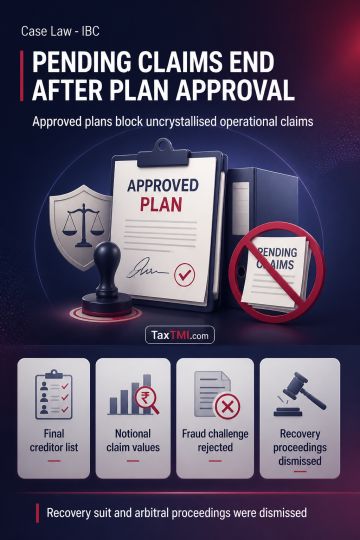
Clean slate principle extinguishes uncrystallised operational claims and bars continuation of pending recovery and arbitral proceedings after plan app...
Works contract classification governs composite layout-development contracts where VAT-paid goods are transferred alongside construction and infrastru...
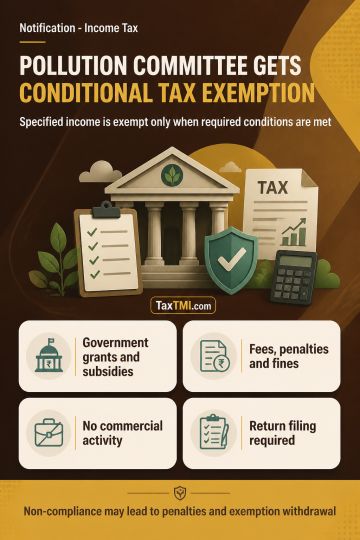
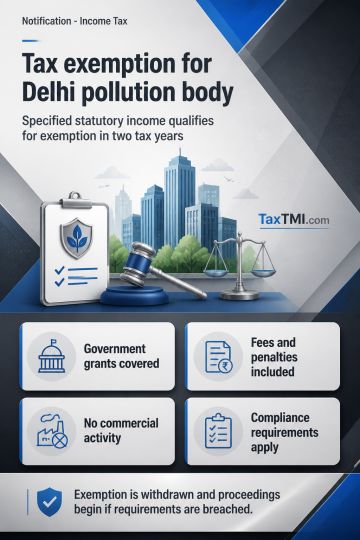
Specified income tax exemption for pollution control body remains conditional on non-commercial activity, unchanged income character, and return filin...
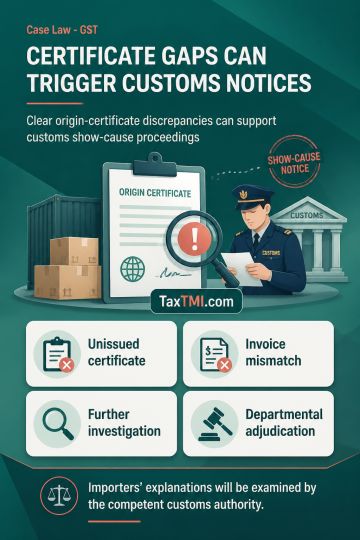
Jurisdictional facts in certificate-of-origin discrepancies can support customs show-cause proceedings, leaving factual explanations for departmental ...
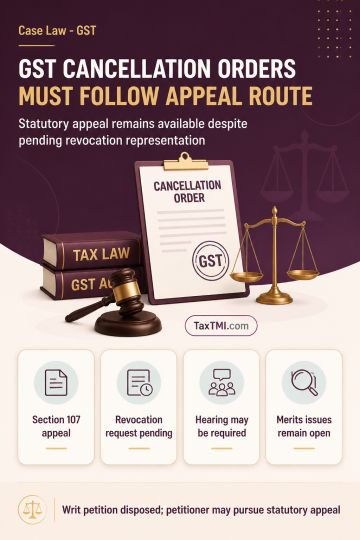
State GST authorities may initiate intelligence-based enforcement action under the GST regime even where the taxpayer is administratively assigned to the Central administration, so the challenge to jurisdiction failed. Disputes over classification and the assessing authority's finding of suppression for invoking Section 74 involved disputed facts and could not be examined in writ jurisdiction, so those objections had to be pursued before the statutory appellate authority under Section 107. The writ court was therefore correct in directing the taxpayer to avail the appeal remedy while leaving all grounds, including jurisdiction, open before the appellate forum.
State GST authorities may initiate intelligence-based enforcement action under the GST regime even where the taxpayer is administratively assigned to the Central administration, so the challenge to jurisdiction failed. Disputes over classification and the assessing authority's finding of suppression for invoking Section 74 involved disputed facts and could not be examined in writ jurisdiction, so those objections had to be pursued before the statutory appellate authority under Section 107. The writ court was therefore correct in directing the taxpayer to avail the appeal remedy while leaving all grounds, including jurisdiction, open before the appellate forum.
Note: It is a system-generated summary and is for quick reference only.
 TaxTMI
  TaxTMI
 of 4817









 Join Channel