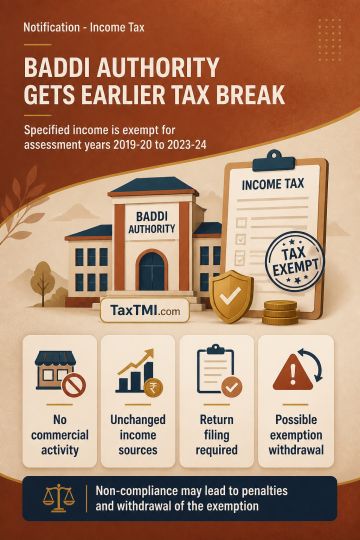
Specified development authority income receives retrospective tax exemption, subject to non-commercial activity, unchanged income sources, and return-...
Unified Brand India framework introduces voluntary Trust Mark certification and funding support for export branding, packaging and global promotional ...
Origin Declaration authentication governs preferential tariff claims under India-UK CETA, requiring a validated reference number before import clearan...
Separate assessment orders for different years remain valid when distinct notices and hearing opportunities prevent prejudice from combined proceeding...
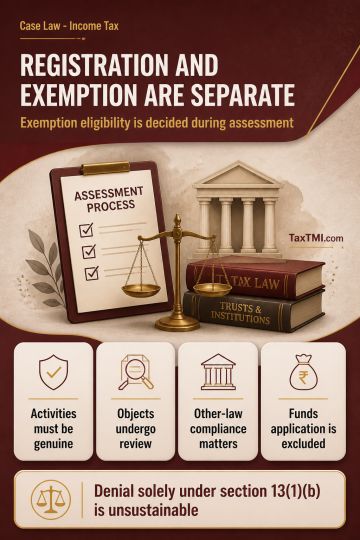
Defined public benefit can retain charitable character; registration renewal requires examining genuine activities and legal compliance, not surplus a...
Capital reduction is distinct from share buy-back, preventing buy-back tax; restructuring interest and related business deductions also survive scruti...
Software expenditure was held to require a year-specific functional test: software forming part of the profit-making apparatus and enhancing system capacity or functionality was treated as capital expenditure with depreciation allowable, while routine subscription-based software was allowed as revenue expenditure. Section 14A disallowance was confined by applying the presumption that investments were made out of own funds where interest-free funds exceeded investments, and Rule 8D(2)(iii) was restricted to investments that actually yielded exempt income; no MAT addition followed where there was no disallowance under Rule 8D(2)(i). Debenture Redemption Reserve was held to be a provision for a known liability set apart for debenture redemption, not an unascertained reserve, and was excluded from book profit under section 115JB.
Software expenditure was held to require a year-specific functional test: software forming part of the profit-making apparatus and enhancing system capacity or functionality was treated as capital expenditure with depreciation allowable, while routine subscription-based software was allowed as revenue expenditure. Section 14A disallowance was confined by applying the presumption that investments were made out of own funds where interest-free funds exceeded investments, and Rule 8D(2)(iii) was restricted to investments that actually yielded exempt income; no MAT addition followed where there was no disallowance under Rule 8D(2)(i). Debenture Redemption Reserve was held to be a provision for a known liability set apart for debenture redemption, not an unascertained reserve, and was excluded from book profit under section 115JB.
Note: It is a system-generated summary and is for quick reference only.
 TaxTMI
  TaxTMI
 of 4817


















 Join Channel


