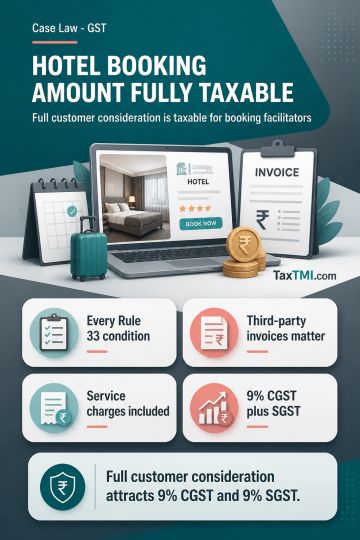
Pure-agent exclusion fails where hotel booking facilitators receive third-party services themselves, making entire customer consideration taxable as r...
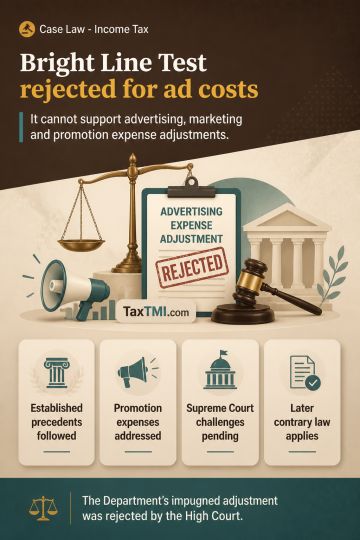
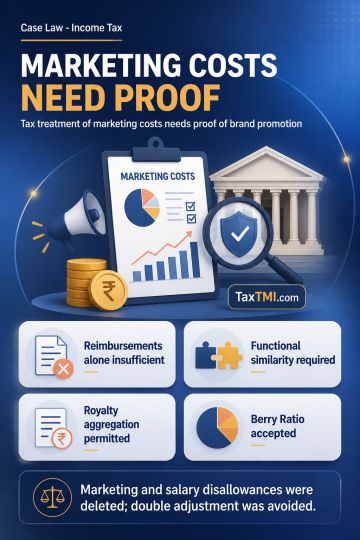
Transfer pricing requires evidence for AMP transactions, functionally reliable comparables, and appropriate aggregation or Berry Ratio benchmarking me...
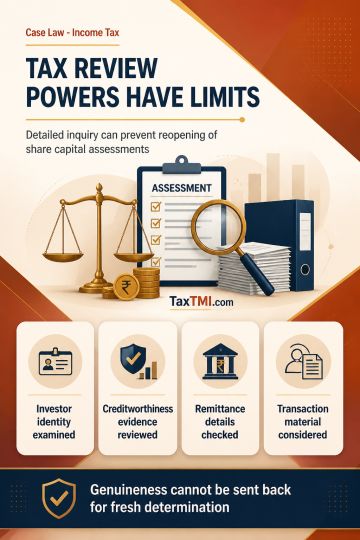
Revisionary jurisdiction cannot reopen share capital assessments where adequate inquiry supports a permissible view and no independent error is establ...
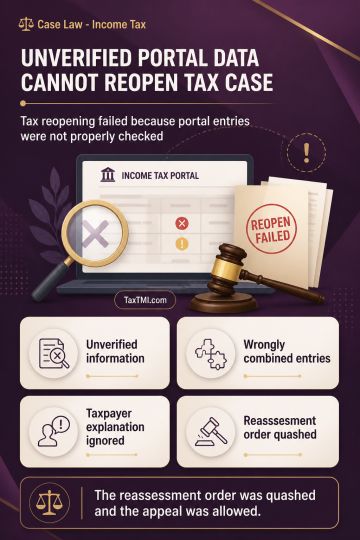
Reassessment jurisdiction fails where unverified portal information is aggregated without examining the taxpayer's explanation or relevance of entries...
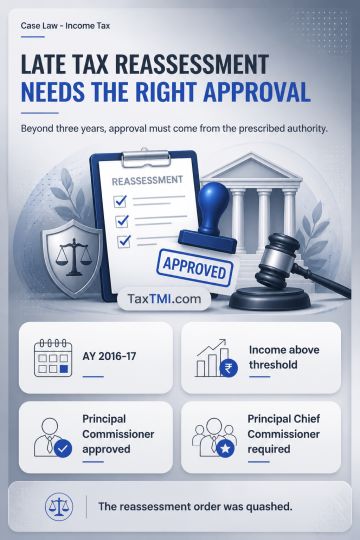
Statutory sanction for delayed reassessment requires approval from the prescribed authority; approval by an inferior authority invalidates jurisdictio...
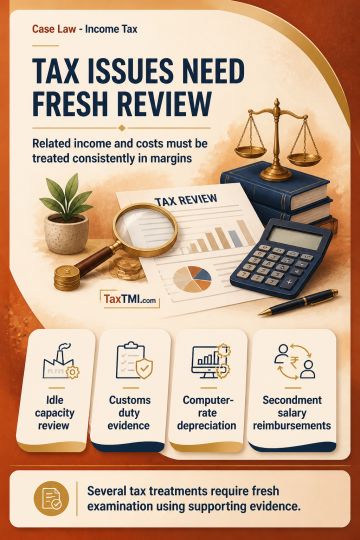
Transfer pricing margin adjustments require matching treatment of non-operating income and related costs, with comparability issues reconsidered on ev...
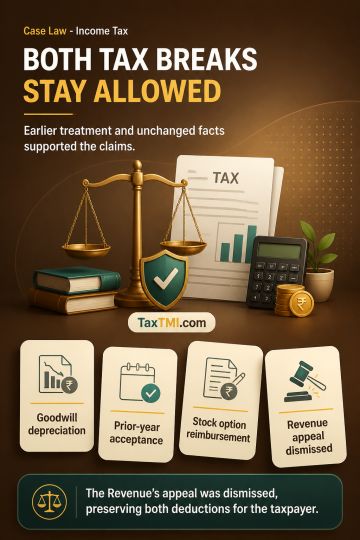
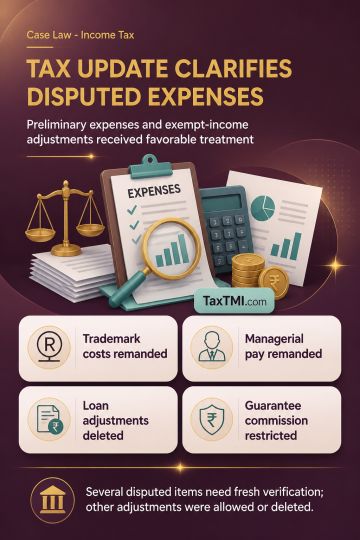
Preliminary-expense amortisation and MAT exempt-income adjustments prevailed, while trademark costs and managerial remuneration require fresh verifica...
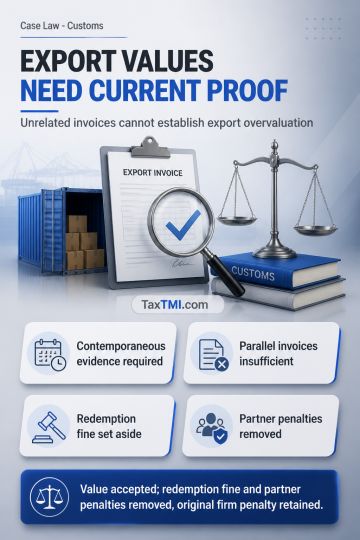
Export valuation requires contemporaneous evidence; unrelated invoices cannot prove overvaluation, and dual penalties on firm and partner are impermis...
Page of 4824
Press 'Enter' after typing page number.
601 to 620 of 96463 Results
❮
❯
❯❯
0 / 200
Expand Note
Add to Folder
No Folders have been created
+
Are you sure you want to delete "My most important" ?
Software expenditure was held to require a year-specific functional test: software forming part of the profit-making apparatus and enhancing system capacity or functionality was treated as capital expenditure with depreciation allowable, while routine subscription-based software was allowed as revenue expenditure. Section 14A disallowance was confined by applying the presumption that investments were made out of own funds where interest-free funds exceeded investments, and Rule 8D(2)(iii) was restricted to investments that actually yielded exempt income; no MAT addition followed where there was no disallowance under Rule 8D(2)(i). Debenture Redemption Reserve was held to be a provision for a known liability set apart for debenture redemption, not an unascertained reserve, and was excluded from book profit under section 115JB.
Software expenditure was held to require a year-specific functional test: software forming part of the profit-making apparatus and enhancing system capacity or functionality was treated as capital expenditure with depreciation allowable, while routine subscription-based software was allowed as revenue expenditure. Section 14A disallowance was confined by applying the presumption that investments were made out of own funds where interest-free funds exceeded investments, and Rule 8D(2)(iii) was restricted to investments that actually yielded exempt income; no MAT addition followed where there was no disallowance under Rule 8D(2)(i). Debenture Redemption Reserve was held to be a provision for a known liability set apart for debenture redemption, not an unascertained reserve, and was excluded from book profit under section 115JB.
Note: It is a system-generated summary and is for quick reference only.
 TaxTMI
  TaxTMI
 of 4824









 Join Channel