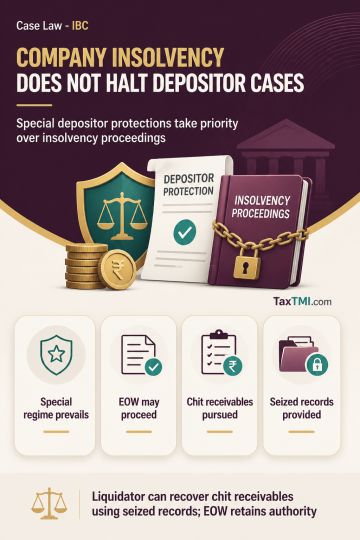
Depositor-protection proceedings prevail over corporate insolvency, while liquidators may recover chit receivables using copies of seized company reco...
Intermediary service classification fails where overseas admission facilitation is supplied independently, preserving export treatment and small-provi...
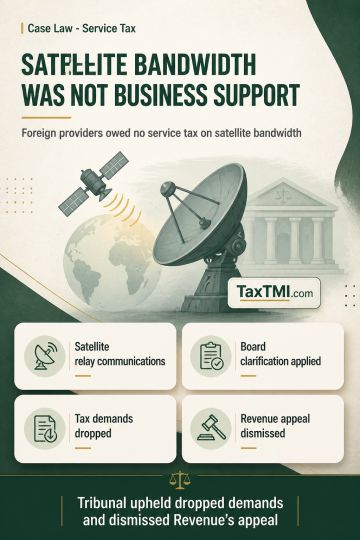
Satellite transponder bandwidth is telecommunication, not Business Support Service; foreign non-telegraph providers triggered no service tax liability...
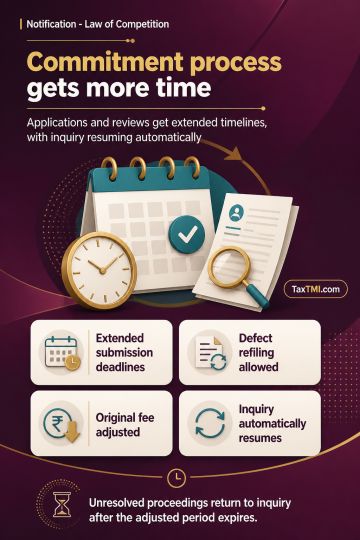
Commitment proceedings gain extended timelines, structured defect refiling, and automatic resumption of inquiry after the adjusted completion period e...
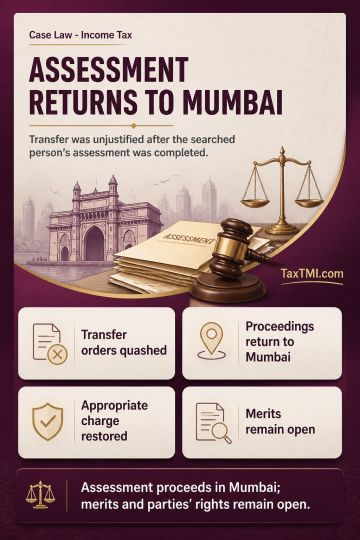
Centralised assessment transfer becomes unwarranted once the searched person's assessment is complete, requiring restoration to the appropriate charge...
Software expenditure was held to require a year-specific functional test: software forming part of the profit-making apparatus and enhancing system capacity or functionality was treated as capital expenditure with depreciation allowable, while routine subscription-based software was allowed as revenue expenditure. Section 14A disallowance was confined by applying the presumption that investments were made out of own funds where interest-free funds exceeded investments, and Rule 8D(2)(iii) was restricted to investments that actually yielded exempt income; no MAT addition followed where there was no disallowance under Rule 8D(2)(i). Debenture Redemption Reserve was held to be a provision for a known liability set apart for debenture redemption, not an unascertained reserve, and was excluded from book profit under section 115JB.
Software expenditure was held to require a year-specific functional test: software forming part of the profit-making apparatus and enhancing system capacity or functionality was treated as capital expenditure with depreciation allowable, while routine subscription-based software was allowed as revenue expenditure. Section 14A disallowance was confined by applying the presumption that investments were made out of own funds where interest-free funds exceeded investments, and Rule 8D(2)(iii) was restricted to investments that actually yielded exempt income; no MAT addition followed where there was no disallowance under Rule 8D(2)(i). Debenture Redemption Reserve was held to be a provision for a known liability set apart for debenture redemption, not an unascertained reserve, and was excluded from book profit under section 115JB.
Note: It is a system-generated summary and is for quick reference only.
 TaxTMI
  TaxTMI
 of 4826







 Join Channel


