Donor-directed corpus contributions retain capital character despite exemption claims under section 10(23C)(vi), preventing their treatment as taxable...
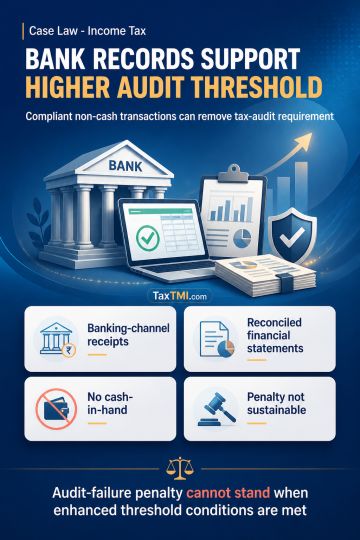
Enhanced tax-audit threshold applies where banking records establish compliant non-cash receipts and payments, eliminating penalty exposure for audit ...
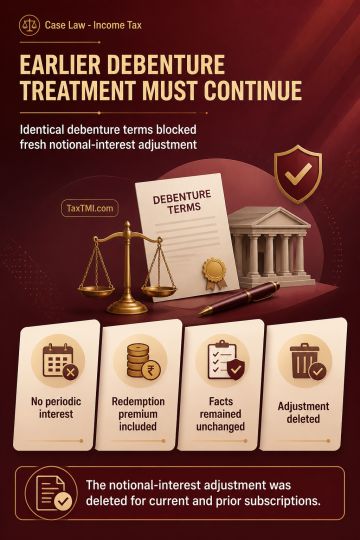
Transfer pricing consistency protects identical non-interest-bearing debenture terms from a later notional-interest adjustment without valid statutory...
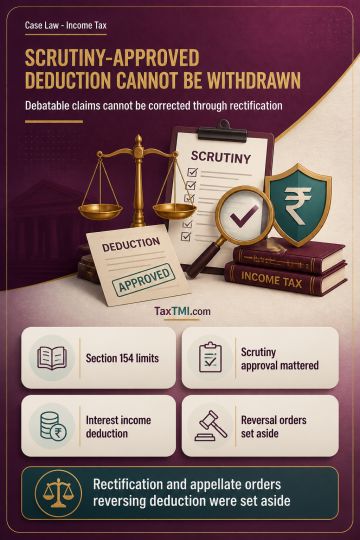
Rectification of debatable deduction claims cannot reverse scrutiny-approved co-operative society interest income deductions as apparent record errors...
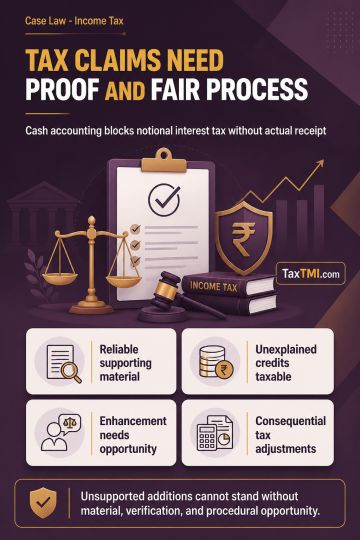
Cash-method accounting bars presumptive interest taxation, while unsupported securities and share-trading additions require reliable material and veri...
Software expenditure was held to require a year-specific functional test: software forming part of the profit-making apparatus and enhancing system capacity or functionality was treated as capital expenditure with depreciation allowable, while routine subscription-based software was allowed as revenue expenditure. Section 14A disallowance was confined by applying the presumption that investments were made out of own funds where interest-free funds exceeded investments, and Rule 8D(2)(iii) was restricted to investments that actually yielded exempt income; no MAT addition followed where there was no disallowance under Rule 8D(2)(i). Debenture Redemption Reserve was held to be a provision for a known liability set apart for debenture redemption, not an unascertained reserve, and was excluded from book profit under section 115JB.
Software expenditure was held to require a year-specific functional test: software forming part of the profit-making apparatus and enhancing system capacity or functionality was treated as capital expenditure with depreciation allowable, while routine subscription-based software was allowed as revenue expenditure. Section 14A disallowance was confined by applying the presumption that investments were made out of own funds where interest-free funds exceeded investments, and Rule 8D(2)(iii) was restricted to investments that actually yielded exempt income; no MAT addition followed where there was no disallowance under Rule 8D(2)(i). Debenture Redemption Reserve was held to be a provision for a known liability set apart for debenture redemption, not an unascertained reserve, and was excluded from book profit under section 115JB.
Note: It is a system-generated summary and is for quick reference only.
 TaxTMI
  TaxTMI
 of 4827











 Join Channel