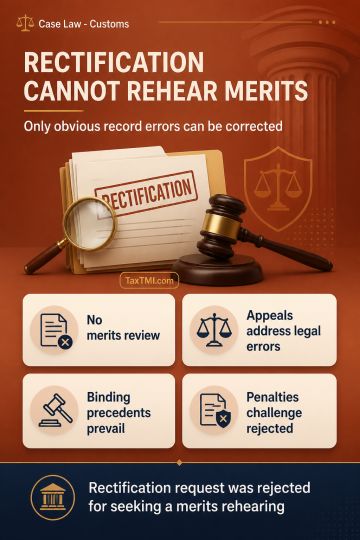
Rectification of mistake remains limited to self-evident record errors, preventing merits review through miscellaneous applications and preserving fin...
Tender creditworthiness conditions may extend to de facto Promoter Directors, with post-participation challenges generally barred absent arbitrariness...
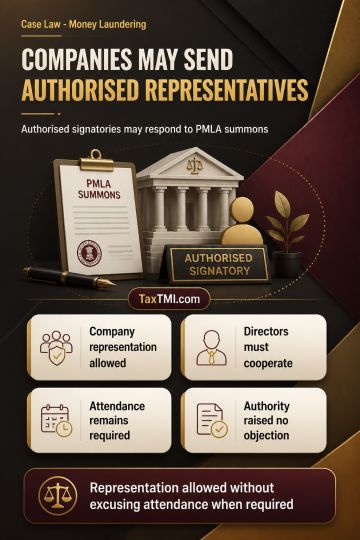
Corporate representation in PMLA summons proceedings permitted through an authorised signatory, subject to directors' continuing cooperation and atten...
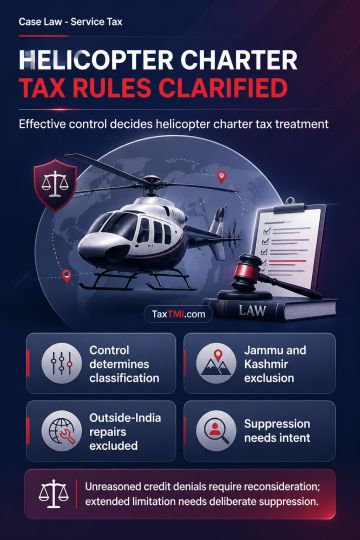
Helicopter charter classification requires effective control analysis, while territorial performance, reasoned credit orders and wilful suppression de...
Specified fund definition expands PAN exemption eligibility for registered alternative investment funds and qualifying International Financial Service...
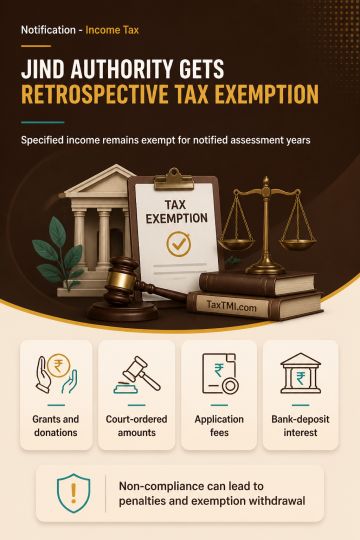
Tax exemption for specified legal-services authority income applies retrospectively, subject to non-commercial activity, unchanged income sources, and...
Imported petroleum product once cleared as condensate on chemical testing and supporting certificates could not be reclassified as light oil unless the department discharged the burden of proving that the exact Chapter Note test was met. The Tribunal held that the departmental material did not satisfy the requirement of 90% or more distillation at 210 C, and no basis was shown to reject the original load port report; the proposed reclassification therefore failed. It further held that revenue neutrality, because the importer was also entitled to credit of any higher duty, indicated absence of intent to evade, and the demand, confiscation and penalties were not sustainable.
Imported petroleum product once cleared as condensate on chemical testing and supporting certificates could not be reclassified as light oil unless the department discharged the burden of proving that the exact Chapter Note test was met. The Tribunal held that the departmental material did not satisfy the requirement of 90% or more distillation at 210 C, and no basis was shown to reject the original load port report; the proposed reclassification therefore failed. It further held that revenue neutrality, because the importer was also entitled to credit of any higher duty, indicated absence of intent to evade, and the demand, confiscation and penalties were not sustainable.
Note: It is a system-generated summary and is for quick reference only.
 TaxTMI
  TaxTMI
 of 4821









 Join Channel