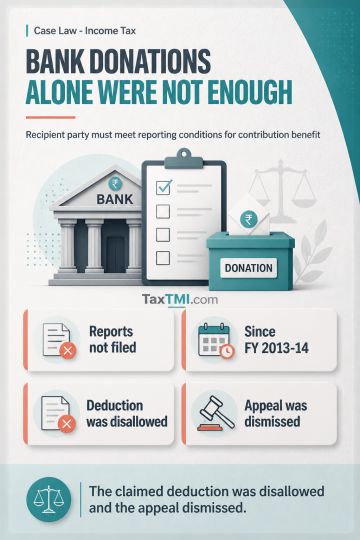
Political contribution deductions require recipient party compliance with contribution-reporting conditions; banking-channel donations alone do not qu...
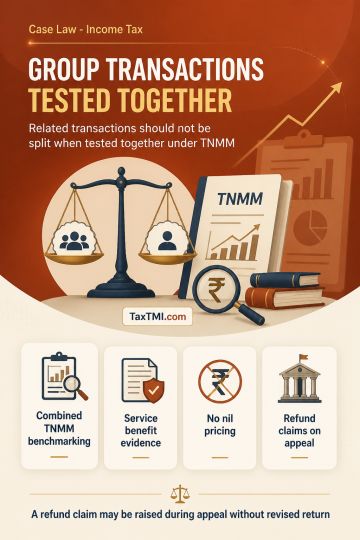
Aggregation under TNMM prevents selective testing of intra-group services without comparable uncontrolled transactions, while appellate additional cla...
Protective assessment cannot duplicate identical receipts under competing characterisations; remote services did not establish a taxable permanent est...
Current account treatment of overseas tournament services removed most FEMA findings, but excess EEFC remittance and delayed repatriation remained bre...
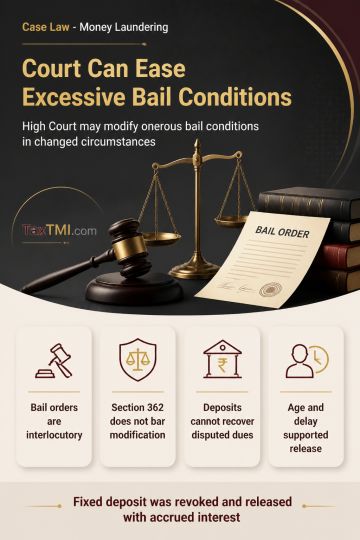
Modification of bail conditions remains available through inherent jurisdiction where onerous deposits undermine justice and cannot recover disputed d...
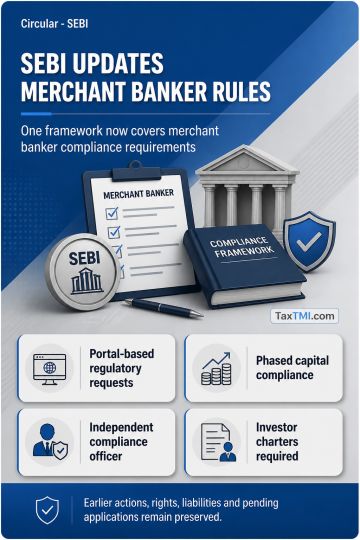
Merchant banker regulation consolidates registration, governance, capital, reporting, outsourcing and investor-protection requirements under an update...
Imported petroleum product once cleared as condensate on chemical testing and supporting certificates could not be reclassified as light oil unless the department discharged the burden of proving that the exact Chapter Note test was met. The Tribunal held that the departmental material did not satisfy the requirement of 90% or more distillation at 210 C, and no basis was shown to reject the original load port report; the proposed reclassification therefore failed. It further held that revenue neutrality, because the importer was also entitled to credit of any higher duty, indicated absence of intent to evade, and the demand, confiscation and penalties were not sustainable.
Imported petroleum product once cleared as condensate on chemical testing and supporting certificates could not be reclassified as light oil unless the department discharged the burden of proving that the exact Chapter Note test was met. The Tribunal held that the departmental material did not satisfy the requirement of 90% or more distillation at 210 C, and no basis was shown to reject the original load port report; the proposed reclassification therefore failed. It further held that revenue neutrality, because the importer was also entitled to credit of any higher duty, indicated absence of intent to evade, and the demand, confiscation and penalties were not sustainable.
Note: It is a system-generated summary and is for quick reference only.
 TaxTMI
  TaxTMI
 of 4823










 Join Channel